
Amid continuing uncertainty over the Naga peace process, NSCN-K (Niki) president ‘gen.’ (Retd) Niki Sumi on Monday cautioned that the existence of two parallel agreements- the Framework Agreement (FA) and Agreed Position (AP)- has created widespread confusion among the Nagas and could weaken the collective Naga voice if unity is not prioritised.
Addressing the media at the group’s CFSB office in Padampukhuri, Niki Sumi said the Naga political issue had reached a critical juncture, warning that internal divisions and lack of clarity would place the future of the Naga people at risk.
Dwelling on the Agreed Position, he said the agreement was initially signed by seven Naga Political Groups (NPGs) and later expanded to include more groups. However, he questioned the emergence of two separate Working Committees under the NNPGs- one led by N Kitovi Zhimomi and the other by Neokpao Konyak.
“There is only one Agreed Position, but now there are two Working Committees. Who owns the agreement? Who leads it?” he asked, asserting that NNPGs must first resolve internal differences and present a united stand instead of confusing the people.
Niki stressed that unity must precede any meaningful progress and urged the NNPGs to move towards a single Agreed Position. He also suggested the adoption of a single taxation system as a symbolic step towards unity. Warning against prolonged fragmentation, he said the Agreed Position risked losing relevance if divisions persisted, drawing a comparison with the Khalistan movement in Punjab, which he said declined due to internal disunity.
Turning to the Framework Agreement, Niki questioned why its contents and competencies had not been made public despite years of negotiations. “How can the Naga people support an agreement when they do not know what it contains?” he asked, adding that opposition to the FA stemmed from lack of transparency rather than ill intent.
He further questioned the emphasis on flag and constitution without first addressing the core issues of sovereignty and integration, and sought clarity on whether such provisions under FA would apply only to Nagaland or also to Naga-inhabited areas outside the state.
Highlighting the broader regional context, Niki Sumi said indigenous communities across the North East were steadily losing ground due to illegal immigration. He cited Arunachal Pradesh and Tripura as examples, while also referring to Assam and Mizoram to underscore the importance of strong political movements in safeguarding indigenous rights.
Comparatively, he said Nagaland had fared better due to the early Naga political movement, which helped check illegal immigration and ensured recognition of Naga identity at the national level.
Addressing economic concerns, Niki dismissed frequent claims of unemployment as exaggerated, arguing that Nagaland was better placed than many states in terms of population-to-job ratio. He urged Nagas to broaden their understanding of employment beyond government jobs, stressing the importance of entrepreneurship and self-employment.
He also advised the public to stop blaming the state government for delays in the Naga political settlement, pointing out that the state functions under the Centre and does not have independent authority in the matter.
Criticising repeated engagements by Naga leaders and tribal bodies with Governors and Government of India officials, he said such actions often complicated rather than resolved the issue. He alleged that efforts were being made to divide the Nagas into smaller groups, weakening their collective strength.
Calling unity the only way forward, Niki Sumi said organisations such as United Naga Council (UNC), Eastern Nagaland People’s Organisation (ENPO) and Naga Tribal Hoho (NTH) must come together if the issue was to be resolved.
He reiterated that unless the Framework Agreement and Agreed Position merged into a single vision document, he would not join peace and reconciliation efforts under the Forum for Naga Reconciliation (FNR), stating that NSCN/GPRN would remain an observer.
Niki asserted that the NSCN/GPRN remains “clean till now” and reaffirmed his organisation’s commitment to safeguarding Naga identity.
He said the government was willing to unite when Nagas themselves arrive at a collective decision, adding that the demands of the Naga people would ultimately be the demands of NSCN (K).
He further disclosed that after signing the ceasefire agreement, the Government of India had asked his group to submit a charter of demands, which he declined, stating that he preferred to observe developments until genuine Naga unity was achieved.
Responding to a query on the recently convened Naga Common Platform, which called for implementation of both Framework Agreement and Agreed Position, Niki maintained that the first step must be the coming together of the two agreements, pointing out that Government of India would not accept the existence of two parallel agreements.
In conclusion, Niki said he would not join any process blindly and reiterated that when the Nagas unite and arrive at a common decision, he would stand by that collective resolve.
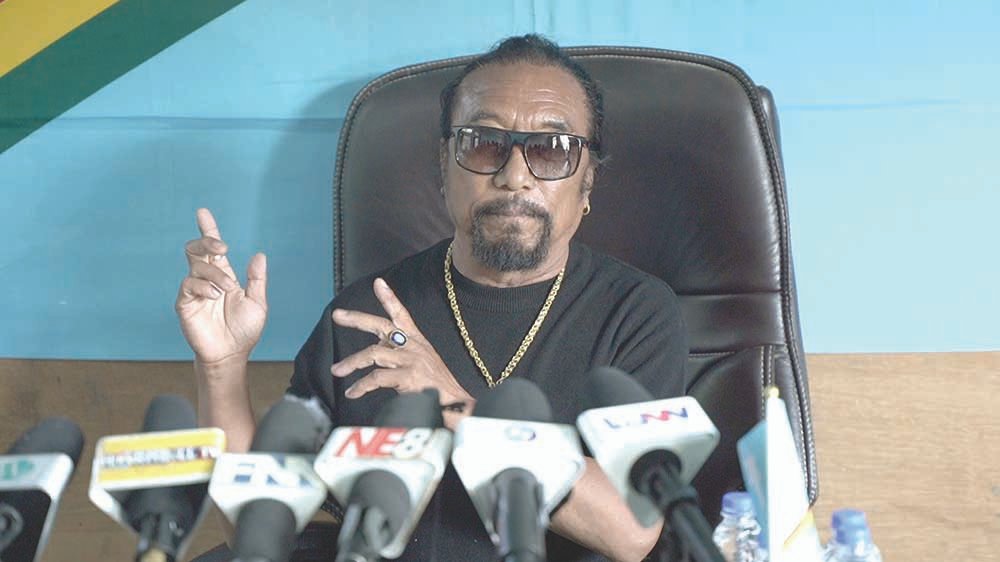
Nagaland: Two agreements weakening Naga voice, warns Niki Sumi
Staff ReporterDIMAPUR, DEC 15 (NPN)