
Nagaland University has initiated teaching and research activities on Indian Knowledge Systems (IKS) within the discipline of chemistry, reflecting its commitment to the objectives of NEP 2020 and encouraging interdisciplinary participation across departments.
The Department of Chemistry has introduced a Value-Added Course titled Chemistry in Indian Knowledge Systems, approved by the Academic Council. Recognising that India’s chemical knowledge traditions have received limited academic attention despite their historical significance, the course seeks to bridge this gap.
The programme aims to introduce learners to foundational aspects of Indian Knowledge Systems, including modes of knowledge transmission and pedagogical traditions, while examining their relevance to contemporary discussions on sustainability and environmental responsibility. Open to students from all disciplines, the course underscores its interdisciplinary character and broad academic relevance.
Urging students to avail the programme, vice-chancellor Prof. Jagadish K. Patnaik said, “Through this teaching initiative, Nagaland University is supporting advanced scholarly research in the area of Indian Knowledge Systems in Chemistry.” He congratulated Prof. Upasana Bora Sinha and her team for their leadership, calling the initiative a significant step toward realizing the vision of NEP 2020.
In addition to the teaching initiative, NU is supporting advanced research in IKS in Chemistry. Prof. Upasana Bora Sinha is currently pursuing a Doctor of Science (D.Sc.) programme on “A Chronological Study of Chemistry in India from 1500 BC to the 21st Century: Linking Ancient Chemistry Knowledge with Modern Day Research Through Computational Simulation.”
The research focuses on a systematic scientific examination of India’s chemical knowledge traditions using contemporary analytical and computational methods. It also documents the history of chemistry in India, a task initiated by Acharya P. C. Ray and continued by scholars such as Prof. B. V. Subbarayappa and Prof. Priyadaranjan Ray.
Course coordinator Prof. Upasana Bora Sinha said the initiatives provide students with contextual learning, interdisciplinary exposure and research-informed perspectives, equipping them to engage critically with India’s scientific heritage and contemporary global challenges. She noted that the University remains committed to inclusive, future-ready education rooted in indigenous knowledge traditions.
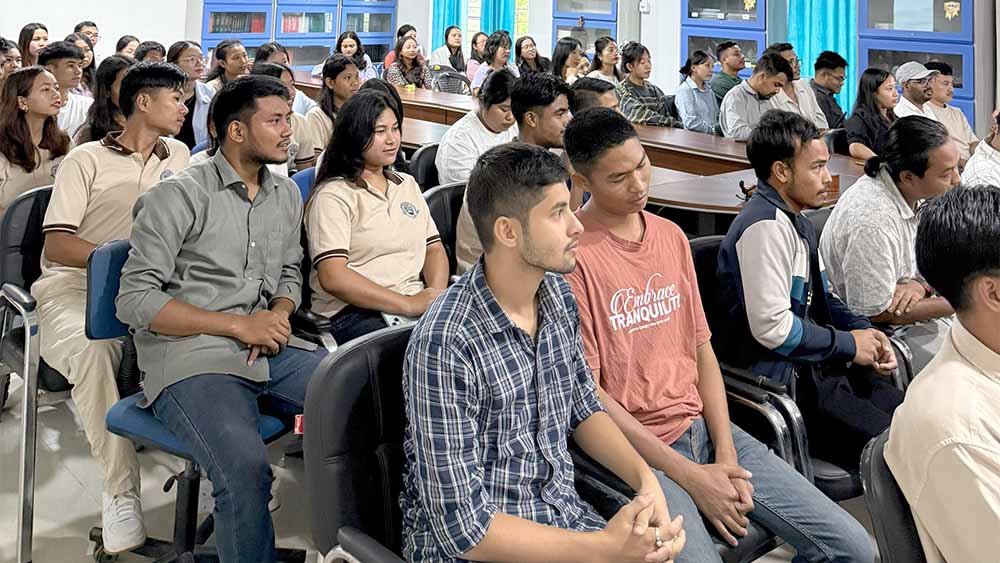
Nagaland University introduces course on Indian Knowledge Systems in Chemistry
DIMAPUR