
Nagaland University (NU) researchers have partnered with Assam Down Town University to carry out the first comprehensive scientific study on Goniothalamus simonsii Hook. f. Thoms., an endangered and endemic medicinal plant found in Meghalaya’s forests.
The findings have been published during October 2025 in Chemistry and Biodiversity, a peer-reviewed journal publishing research on the chemical aspects of biological diversity, including natural products, chemical ecology, and molecular studies of living organisms.
Long used by indigenous communities to treat gastrointestinal complications, throat irritation, typhoid fever, and malaria, this plant had never before been studied for its scientific or pharmacological potential.
The study provides scientific validation for the plant’s traditional use and reveals that G. simonsii is a rich source of bioactive phytochemicals with potent antioxidant, antimicrobial, and anticancer activities.
Using advanced analytical tools and computational modelling, the team demonstrated how natural compounds from this species interact with cancer-related proteins, offering valuable leads for the development of new, nature-based therapeutic drugs.
The Research was led by Dr. Mayur Mausoom Phukan, faculty, NU, with research scholar Samson Rosly Sangma.
The paper was co-authored by Samson Rosly Sangma; Dr. Mayur Mausoom Phukan, assistant professor, department of forestry, NU; Dr. Dhrubajyoti Gogoi, assistant professor, department of biotechnology, Assam Down Town University; Dr. Pranay Punj Pankaj, associate professor, department of zoology, NU; and Vahshi Chongloi, research scholar, department of forestry, NU.
Speaking about the research, NU vice chancellor, Prof. Jagadish K Patnaik, said that NU researchers, through this study, were not only contributing to the conservation and understanding of a rare plant species but also helping to bridge the gap between traditional knowledge and modern science.
Prof. Patnaik commended the research team for their dedication and innovative approach. “I am confident that this work will open new pathways for sustainable utilization of our rich biodiversity,” he said.
Elaborating on this research, Dr. Mayur Mausoom Phukan, said that the study bridges traditional knowledge with modern science at a crucial time when antibiotic resistance, chronic illnesses, and the side effects of synthetic drugs continue to strain healthcare systems. H said their findings reaffirm that India’s rich biodiversity holds untapped potential for modern drug discovery. “Goniothalamus simonsii not only offers pharmacological promise but also underscores the urgent need to conserve such endangered species,” Dr. Phukan said.
Highlighting the unique aspects of this research, Samson Rosly Sangma said that Goniothalamus simonsii was an exceptionally rare species, with its population declining alarmingly and now confined to only a few natural habitats.
Beyond its immediate medicinal implications, Sangma said this study represents a model for how traditional ethnomedicinal knowledge can be combined with modern biotechnological and computational methods to unlock new possibilities for drug discovery.
The researchers plan to conduct in vivo and clinical studies to validate these findings further and explore the plant’s potential as a component of future phytopharmaceutical formulations.
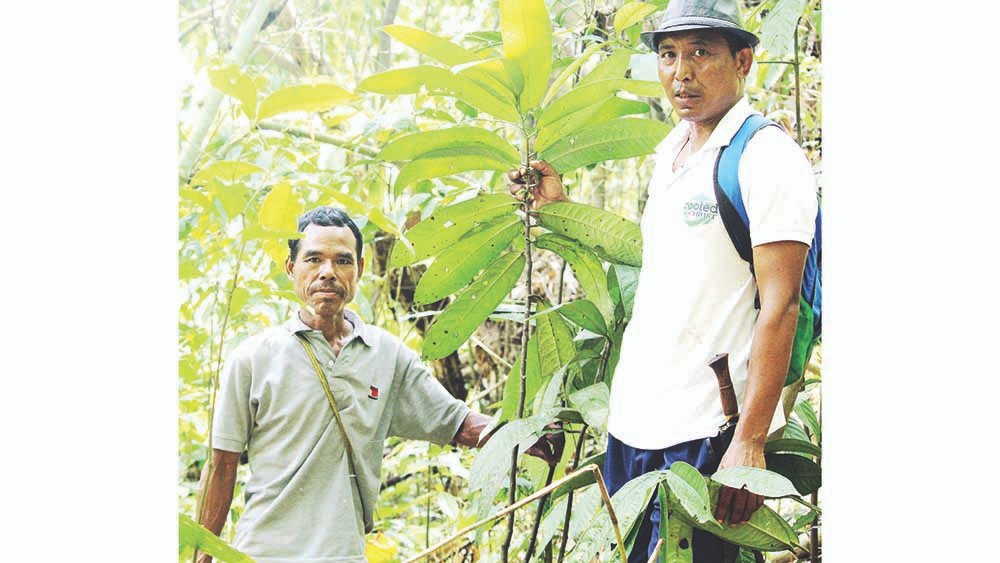
Nagaland University study unlocks medicinal secrets of rare plant
DIMAPUR, NOV 10 (NPN)