
In a strong show of unity cutting across party lines and organisations, Nagaland BJP Mahila Morcha on Thursday organised a “Women’s Conference on the 33% Women Reservation Bill” at Town Hall Dimapur, where women leaders collectively endorsed the landmark legislation and called for its sincere and timely implementation, terming it a decisive step toward inclusive governance and gender justice.
Delivering the solidarity address, NPF Women Wing working president, Vikali A. Zhimomi, termed the legislation a “defining moment” in the country’s democratic evolution, asserting that the Bill goes beyond political reform and represents long-overdue recognition of women’s contributions to society. “The voices that have built our homes, economy, and culture have remained underrepresented in law-making spaces for decades,” she said, adding that the reservation provision marks a decisive shift from rhetoric to action.
She stressed that representation is not a concession but a fundamental pillar of justice, and that women’s participation in governance would lead to more responsive policies in critical sectors such as healthcare, education, and economic empowerment.
Vikali further expressed appreciation to Prime Minister Narendra Modi for his leadership, noting that structural reforms of such scale require both courage and commitment.
Addressing concerns around reservation, she argued that “opportunity without access cannot deliver equality,” pointing out that systemic barriers have historically limited women’s entry into politics. Vikali also highlighted key features of the Act, including provisions for SC/ST women and a review mechanism, ensuring both inclusivity and accountability.
Bringing the focus to the State, she highlighted the growing presence of women in leadership roles under the state government led by chief minister Dr. Neiphiu Rio, and cited the 2024 urban local body elections, where over 100 women were elected, including candidates from unreserved seats.
Dimapur Municipal Council deputy chairperson, Imlinaro Ezung, in her solidarity speech, provided a personal perspective on the impact of reservation policies. Recalling her entry into public life, she said the 33% reservation framework served as both motivation and a platform for women like her to step forward. Despite initial challenges, including the change of her ward from a reserved to a general category, she said women continued to contest and succeed, demonstrating readiness and capability. “The results of the 2024 ULB elections clearly showed that Naga women are prepared to lead,” she stated.
Ezung further highlighted that 198 women contested the elections, with more than 100 emerging victorious. She described the elections as peaceful and progressive, adding that even the Supreme Court commended Nagaland for ensuring high participation and success rates among women candidates. She emphasized the role of state leadership in advancing women’s empowerment, citing the implementation of long-pending reservation in Urban Local Bodies and the introduction of gender-focused budgeting. According to her, such measures reflect a targeted approach to integrating women into governance, policy-making, and institutional frameworks.
Touching on demographic trends, she observed that the improving female-to-male ratio in the state reinforces the importance of equitable representation. “Reservation is not about replacing anyone. It is about inclusive leadership where every voice contributes to the common good,” she added.
NPP Nagaland Women Wing president Audrey dwelt on the paradox faced by Naga women, being central to society’s functioning yet absent from decision-making spaces. “We build our communities, yet we are missing where policies are shaped,” she remarked, urging society to confront this imbalance. Rejecting arguments opposing women’s reservation in the name of tradition, she stated that Naga customs uphold values of strength and shared responsibility. “This is not about culture. It is about exclusion,” she said.
She stressed that the 33% reservation is neither a gift nor a favour, but a matter of justice long overdue. Referring to national discourse, she said the debate on whether women deserve reservation has been settled and focus must now shift to implementation. She raised concerns over procedural delays, particularly delimitation, cautioning that such processes should not delay women’s participation. “Justice delayed for women is democracy denied,” she said, urging collective action while clarifying that the movement is about shared responsibility, not taking power away from men.
Also delivering her solidarity message, Eastern Nagaland Women Organisation (ENWO) president Yingphi Konyak outlined the broader significance of the policy. She said the 33% reservation seeks to correct historical underrepresentation of women in leadership and decision-making roles. Citing grassroots governance, she noted that women’s participation has improved focus on community welfare, education, health, and livelihoods.
She emphasized that reservation helps create a level playing field by addressing social and structural barriers, while increased visibility of women leaders would inspire future generations. Describing it as a corrective, not permanent measure, she said it aims to normalize equal participation over time. “It is about fair representation, stronger governance, and progress for society as a whole,” she stated.
Other speakers included Tenyimia Women Association president Kerei Pfukha, Dimapur Women for City Impact coordinator Khontele Seb, and entrepreneur Toiniali, who also expressed support for the legislation.
The conference concluded with the adoption of a collective resolution expressing unwavering support for the passage and effective implementation of the 33% Women Reservation Bill in Parliament.
Earlier, the programme was chaired by Apila Tia, invocation was offered by Twinkle Kiba, and the resolution and vote of thanks were delivered by State BJP Mahila Morcha president Tsachola Rothrong.
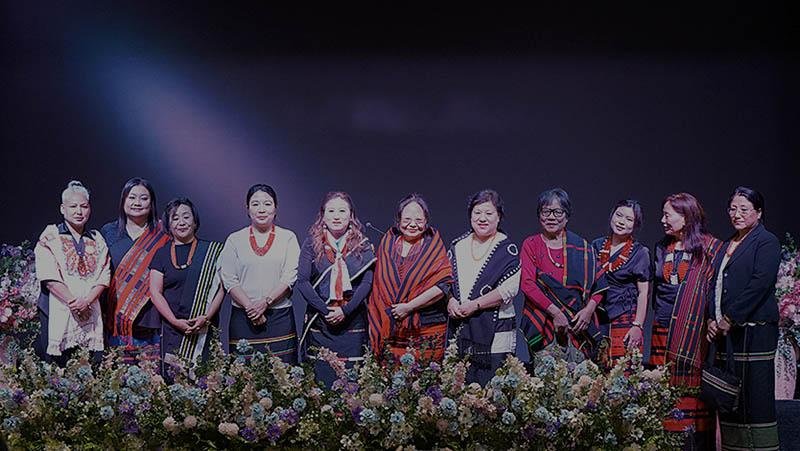
Nagaland: Women leaders rally for early rollout of 33% quota
Staff Reporter