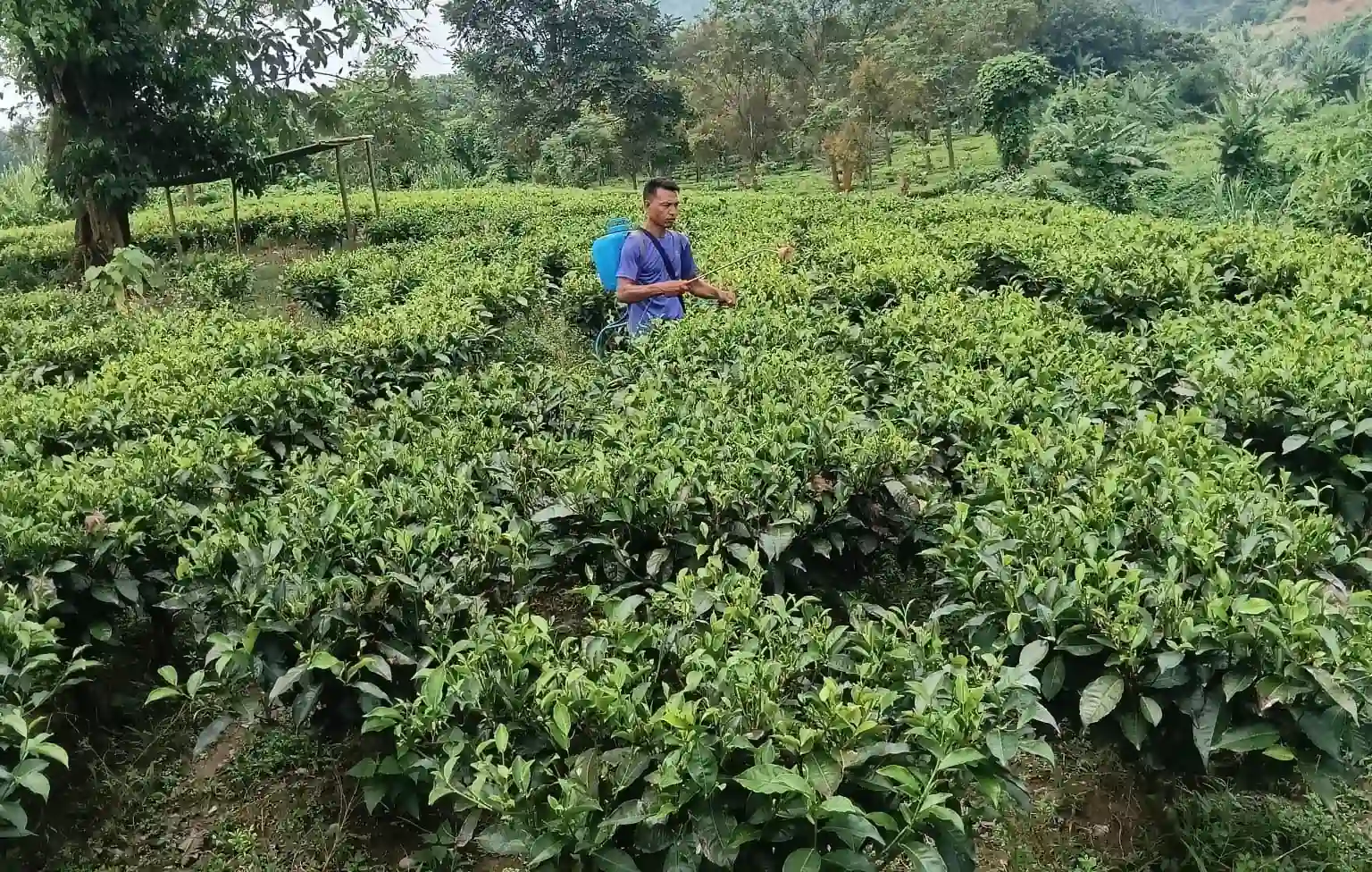
DIMAPUR: Mantuk Phom, a progressive farmer from Apoiji village, Tamlu block, Longleng district, has emerged as an inspiring example of diversified natural farming and sustainable agricultural livelihoods.
According to KVK Longleng, Phom began adopting natural farming in 2020 on three acres after receiving training from ICAR–Krishi Vigyan Kendra (KVK), Longleng. Despite an initial decline in yield following the discontinuation of chemical inputs, he persevered with technical guidance and gradually converted his entire 12 acre farm to natural farming. His diversified enterprise integrates tea, rice, banana, vegetables, livestock and fisheries, generating a reported annual gross return of Rs. 14.25 lakh.
The transformation has been supported by crop diversification, mixed cropping, mulching, livestock integration and on farm resource recycling. Phom prepares and uses natural inputs such as Ghanajeevamrit, Jeevamrit, Beejamrit, Neemastra, Agniastra and botanical extracts. His locally developed preparation, popularly known as “Mantuckastra” among the Phom tribe, represents farmer led innovation in natural crop protection.
Natural farming has reportedly improved soil health and resilience. More than 50 analysed soil samples showed rich organic carbon after two years, with phosphorus levels increasing by up to 179% between 2024 and 2026. Crop residues are used as cattle feed and mulch, while livestock resources support preparation of natural inputs, strengthening internal recycling.
Phom’s journey has been guided by Shubhendu Kumar Behera, Subject Matter Specialist (Plant Pathology), ICAR-KVK Longleng, through training, field visits, Farmer Field Schools and exposure programmes. His farm now serves as a learning platform for neighbouring farmers.
Tea occupies six acres of his farm, producing 158 quintals of green leaf and generating Rs. 7.9 lakh annually. Rice, banana, king chilli, maize, ginger, turmeric and vegetables provide additional income. His enterprise provides employment to 10 workers and has trained 211 farmers, of whom 67 are now practising natural farming in villages including Setap, Ngetchongching, Namha, Bura Namsung and Pongching.
Phom’s success illustrates the potential of perseverance, innovation and technical guidance in building sustainable livelihoods under rainfed conditions. Future prospects include small scale tea processing, packaging, branding and value addition to strengthen market access and farm income. His experience stands as a farmer led example of diversified and sustainable agriculture in Nagaland.