
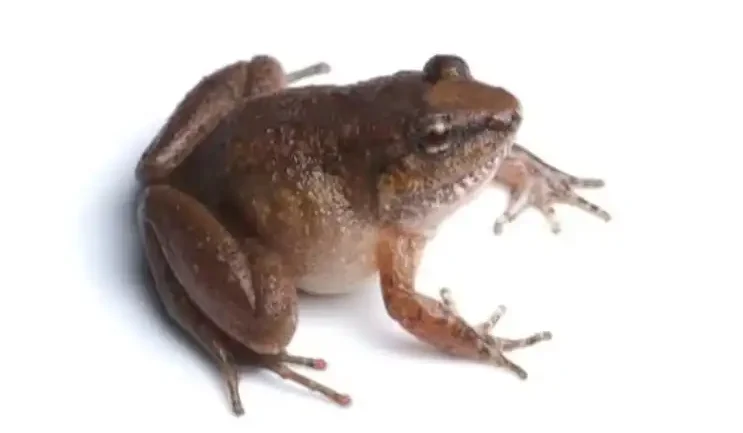
Researchers from the Wildlife Institute of India have identified a new species of mud-nesting “fanged frog” in Namdapha Tiger Reserve, Arunachal Pradesh, adding to India’s amphibian diversity. Named Limnonectes motijheel after a wetland inside the reserve, the species was discovered during field surveys conducted between 2022 and 2023. Distinguished by fang-like jaw structures and unusual breeding habits, the frog builds cup-shaped mud nests beneath leaf litter instead of laying eggs in water.
The study, led by Bitupan Boruah, NV Rajiv, Sourav Dutta and Abhijit Das, confirmed the species through genetic and morphological analysis, establishing clear differences from related frogs. Researchers noted its distinctive “wooooak” call, typically heard in April and May, and said males call from within concealed nests to attract mates, making detection difficult during surveys. The team also recorded Limnonectes longchuanensis in India for the first time, raising the country’s known Limnonectes species count to six.
Currently, L. motijheel appears confined to Namdapha and surrounding forests, though scientists believe it may exist in similar habitats across the Indo-Burma biodiversity hotspot. The discovery highlights the importance of amphibians as indicators of ecosystem health and underscores the need for deeper exploration of overlooked microhabitats such as leaf-littered forest floors. Researchers stressed that continued conservation efforts in Northeast India are vital to protect its rich but underexplored biodiversity.