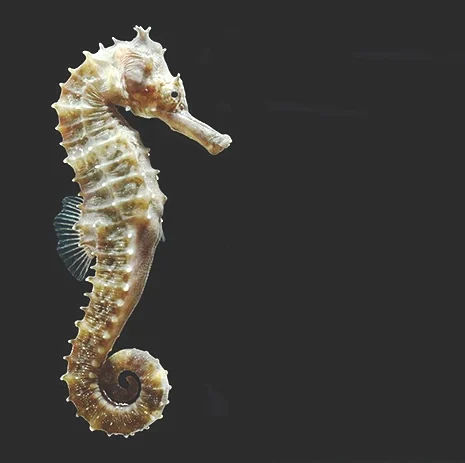
Scientists have resolved more than 150 years of confusion over the identification of thorny seahorse species using a seahorse collected from fish bycatch at the Tuticorin Fisheries Harbour in Tamil Nadu.
An international team led by the Kerala University of Fisheries and Ocean Studies (KUFOS), Kochi, has identified from the Indian Ocean, a new species that is taxonomically distinct from those found in the Pacific Ocean and the South China Sea.
Their study has found that the iconic thorny seahorse, long believed to be a single species ranging from the Red Sea and East Africa across the Indian Ocean to the western Pacific, is in fact three distinct species.
“These findings end more than 150 years of taxonomic confusion and provide an important foundation for future conservation of the world’s seahorses,” the study said.
The findings, published in the journal Zootaxa, are expected to reshape the understanding and conservation of one of the world’s most recognisable marine fishes, a KUFOS release said here on Wednesday.
The newly described species, Hippocampus amandavincentae, has been named in honour of Amanda Vincent, one of the world’s leading seahorse experts, marine biologist and founder of Project Seahorse.
The breakthrough began when Shalu Kannan, the lead author who recently completed her PhD on seahorse conservation at KUFOS, collected specimens from heaps of fish bycatch at the Tuticorin fisheries harbour.
“Accurate species identification is a crucial first step towards understanding distribution, population status, and developing effective conservation strategies. This discovery reveals the hidden biodiversity in the Indian Ocean and highlights the importance of documenting and protecting its unique species and the critical habitats they depend on,” Shalu said.
Although thorny seahorses are among the most recognisable members of the genus Hippocampus, their outward similarity had hidden important differences for more than a century.
By combining detailed studies of body features with molecular analysis and examining historic museum specimens from around the world, the researchers showed that Hippocampus amandavincentae can be distinguished from other spiny seahorses by its snout length and the number and nature of spines on the coronet and the principal trunk and tail ridges. (PTI)