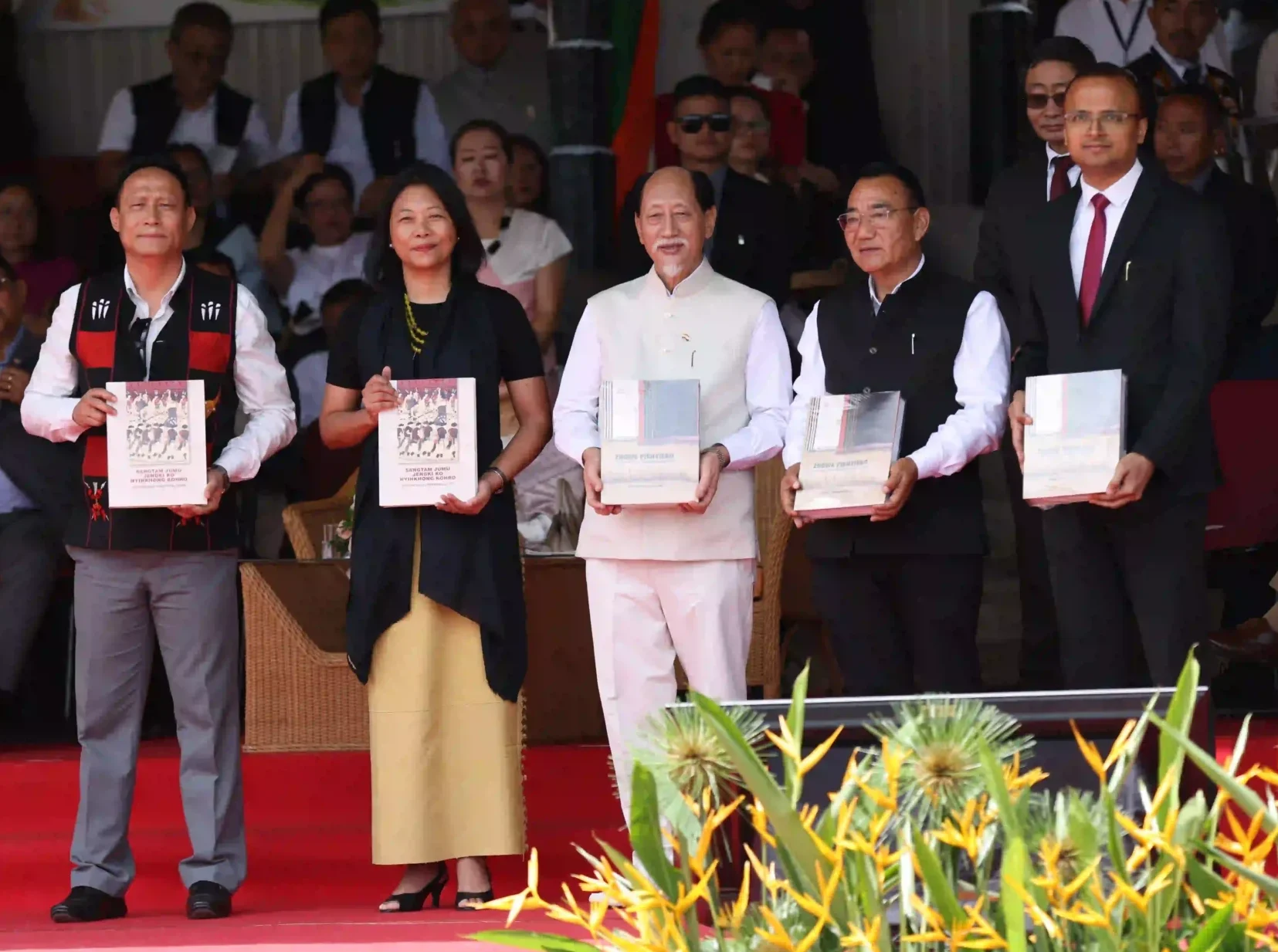
DIMAPUR: Nagaland Handloom & Handicrafts Development Corporation Ltd. (NHHDC Ltd.), under the Industries & Commerce Department, with technical support from the Nagaland Science & Technology Department and in collaboration with Tribal Apex Bodies of Nagaland, has undertaken a comprehensive documentation project to preserve, promote and safeguard the rich cultural heritage and traditional knowledge of the indigenous tribes of the state.
According to a press release, the initiative seeks to preserve traditional attires and ornaments passed down through generations, largely through oral traditions with limited written records. The project provides authentic descriptions, visual records and detailed information on traditional designs that form an integral part of the cultural identity of Nagaland’s tribes.
Beyond cultural preservation, the documentation also contributes towards protecting Intellectual Property Rights (IPR) associated with traditional knowledge and indigenous cultural expressions. By officially recording designs, motifs, patterns and distinctive cultural elements, the project aims to safeguard indigenous knowledge from misuse and unauthorised commercial exploitation, while ensuring rightful ownership and recognition for the communities.
Under Phase I, traditional attires and ornaments of ten tribes-Ao, Khiamniungan, Konyak, Lotha, Pochury, Phom, Rengma, Sumi, Tikhir and Zeliang-were documented, with the books formally released on December 1, 2025 during the Statehood celebration programme by the Chief Minister. Continuing the initiative, Phase II expanded documentation to include Angami and Sangtam tribes, with the books formally released on August 15, 2026 by the Chief Minister during the Independence Day Celebration Programme.
The release informed that the documentation will serve as an important reference for researchers, scholars, artisans, designers, cultural institutions and the communities themselves, while strengthening awareness and appreciation of Nagaland’s diverse indigenous heritage.