
Trump announces Hormuz blockade; Tehran accuses US of ‘illegal demands’
The United States and Iran failed to reach a peace agreement after marathon 21-hour negotiations in Pakistan, casting uncertainty over a fragile two-week ceasefire and raising fresh concerns over escalating tensions in West Asia.
The high-stakes talks, held in Islamabad, marked the first direct, high-level engagement between the two countries since the 1979 Islamic Revolution. However, both sides emerged blaming each other for the collapse, with key differences remaining unresolved on Iran’s nuclear programme, control of the Strait of Hormuz, and the release of frozen Iranian assets.
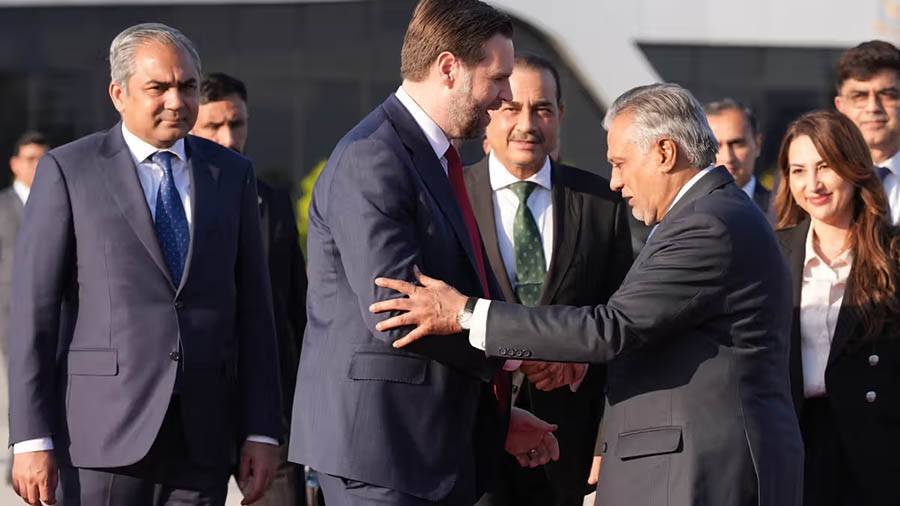
US Vice President JD Vance, who led the American delegation, said Washington had presented its “final and best offer” but the Iranian side refused to accept the terms. “We’ve had substantive discussions… but we have not reached an agreement,” he said, adding that the US required a firm commitment from Iran that it would not pursue nuclear weapons.
Shortly after the talks broke down, US President Donald Trump took to social media, saying that the US Navy is going to start “ destroying the mines the Iranians laid in the straits”, warning that any Iranian who fires at the US or at “peaceful vessels will be blown to hell”.
“No one who pays an illegal toll will have safe passage on the high seas,” he said, adding that the blockade – which will involve so far unspecified other countries – will “begin shortly”.
“Iran will not be allowed to profit off this Illegal Act of EXTORTION. They want money and, more importantly, they want Nuclear,” Trump wrote.
On the Iranian side, Parliament Speaker Mohammad Bagher Ghalibaf, who headed Tehran’s negotiating team, said it was up to the US to “earn our trust”. Iran’s foreign ministry accused Washington of making “excessive and illegal demands” and maintained that the success of diplomacy depended on goodwill and mutual respect.
Iranian officials indicated that mistrust stemming from the recent 40-day conflict and disagreements over strategic issues, including transit through the Strait of Hormuz, posed major hurdles. Foreign ministry spokesperson Esmaeil Baqaei said expectations of reaching a deal in a single round of talks were unrealistic, but expressed willingness to continue efforts to bridge differences.
The collapse of the talks has dimmed prospects of reopening the Strait of Hormuz, a critical global energy corridor, thereby raising concerns over oil supply stability and international trade. The Iranian foreign ministry said the success of the “diplomatic process depends on the seriousness and goodwill of the other side, and refraining from excessive and illegal demands”. Iran’s foreign ministry spokesman EsmaeilBaqaei said issues like the transit through Strait of Hormuz created some hurdles in the talks.
“Naturally, we should have never expected to reach a deal in one session. We will continue to work to bring the two views of Americans and Iranians closer together,” he said.
Meanwhile, Pakistan, which facilitated the dialogue, reaffirmed its commitment to continue mediating between the two sides. Deputy Prime Minister Ishaq Dar said Islamabad would persist in encouraging engagement and dialogue. He also thanked both nations for accepting Prime Minister Shehbaz Sharif’s proposal that had earlier led to a temporary ceasefire.
The US delegation included senior officials such as special envoy Steve Witkoff and White House advisor Jared Kushner. Vance said the negotiating team remained in constant contact with President Trump and other top officials throughout the discussions.
Iran had reportedly presented a 10-point plan during the talks, which included demands for the withdrawal of US forces from West Asia, lifting of sanctions, and recognition of its control over the Strait of Hormuz.
The negotiations were initiated just days after a ceasefire was announced following intense hostilities triggered by US and Israeli strikes on Iran on February 28, which disrupted global energy markets.