
Correspondent
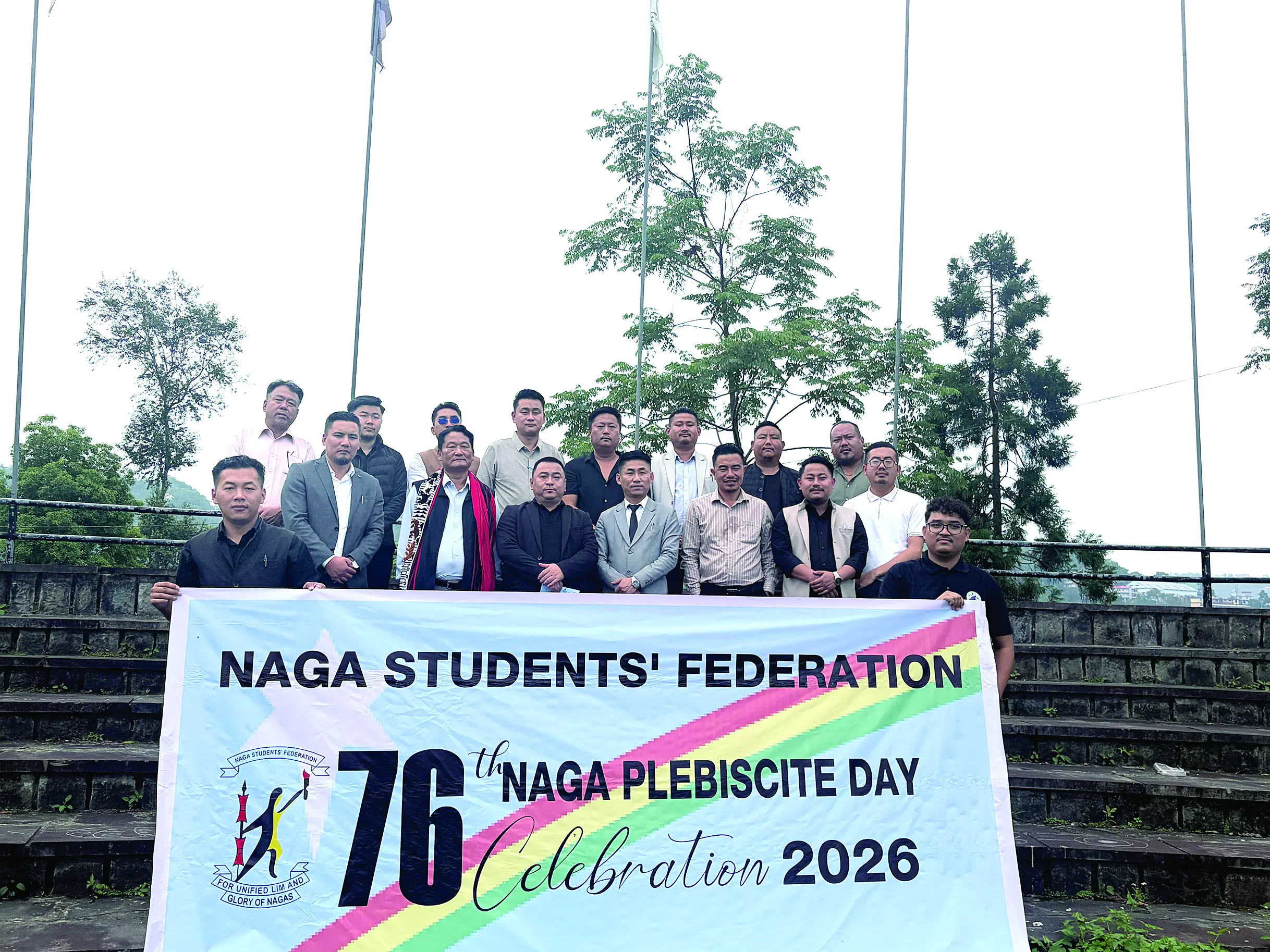
KOHIMA, MAY 16 (NPN): The Naga Students’ Federation observed the ‘76th Naga Plebiscite Day’ at NSF Conference Hall, in Kohima, on May 16, with speakers reiterating the historical and political significance of the 1951 plebiscite and calling for Naga unity.
Addressing the programme, former NSF president P. Chuba Ozukum said the NSF represented Naga students from all Naga homelands and that the day was being observed on behalf of all Nagas and Naga students.
He stated that the Nagas belonged neither to India nor Myanmar and said the plebiscite was conducted under the leadership of A.Z. Phizo and his colleagues.
Ozukum stated that before British occupation, every Naga village functioned as an independent village republic with its own administration, customs and traditions. He said that conflicts frequently occurred between the British and the Nagas as the British attempted to dominate Naga villages, but the Nagas resisted occupation.
According to him, the final war between the British and the Nagas took place in 1879, following which both sides realised war was not beneficial. He said a “Gentleman Agreement” was signed in 1880 to end conflict and bring peace.
Referring to the memorandum submitted to the Simon Commission in 1929, Ozukum said Naga leaders had appealed to be left alone after the British left India so the Nagas could continue to live independently.
However, he alleged that India inherited the colonial legacy after the British departure and suppressed the Naga people. He also alleged that many Nagas were killed and atrocities committed against Naga women.
Ozukum said the plebiscite was meant to convey to the world that the Nagas did not consent to Indian rule.
He said the plebiscite involved participation from hundreds of villages despite the lack of transportation and communication facilities during that period.
He described the plebiscite as a sacred and unique history for all Nagas and said Naga political negotiators continued to remind Indian leaders that 99.9 per cent of Nagas voted for sovereignty.
Questioning whether the aspirations of the Naga forefathers were being fulfilled today, Ozukum called for introspection and urged all Naga groups to unite.
He also questioned whether all Naga political negotiators shared the same vision regarding sovereignty and independence, stating that different groups were pursuing different agendas.
Stressing the role of the younger generation, he said the NSF must continue educating students on Naga history and the Naga movement, while expressing concern over divisions among Nagas from different regions.
In his presidential address, NSF president Mteisuding Heraang said 76 years had passed since the Nagas overwhelmingly voted for sovereignty. He described Naga Plebiscite Day as a reminder of the sacrifices made by Naga forefathers for the rights and freedom of the Naga people. Heraang stated that the Nagas had declared independence on August 14, 1947 and that the plebiscite of May 16, 1951 reaffirmed the Naga aspiration for sovereignty.
He alleged that the Indian government continued to suppress the Naga people and deny them their rights, but asserted that the Nagas would never bow down to any country attempting to suppress them.
Paying tribute to those who sacrificed their lives for the Naga cause, Heraang said the Nagas were peace-loving people but warned that their patience should not be mistaken for weakness.
The programme was chaired by NSF general secretary Kenilo Kent, while associate pastor (youth), Mao Baptist Church Kohima, George Arche pronounced the invocation.