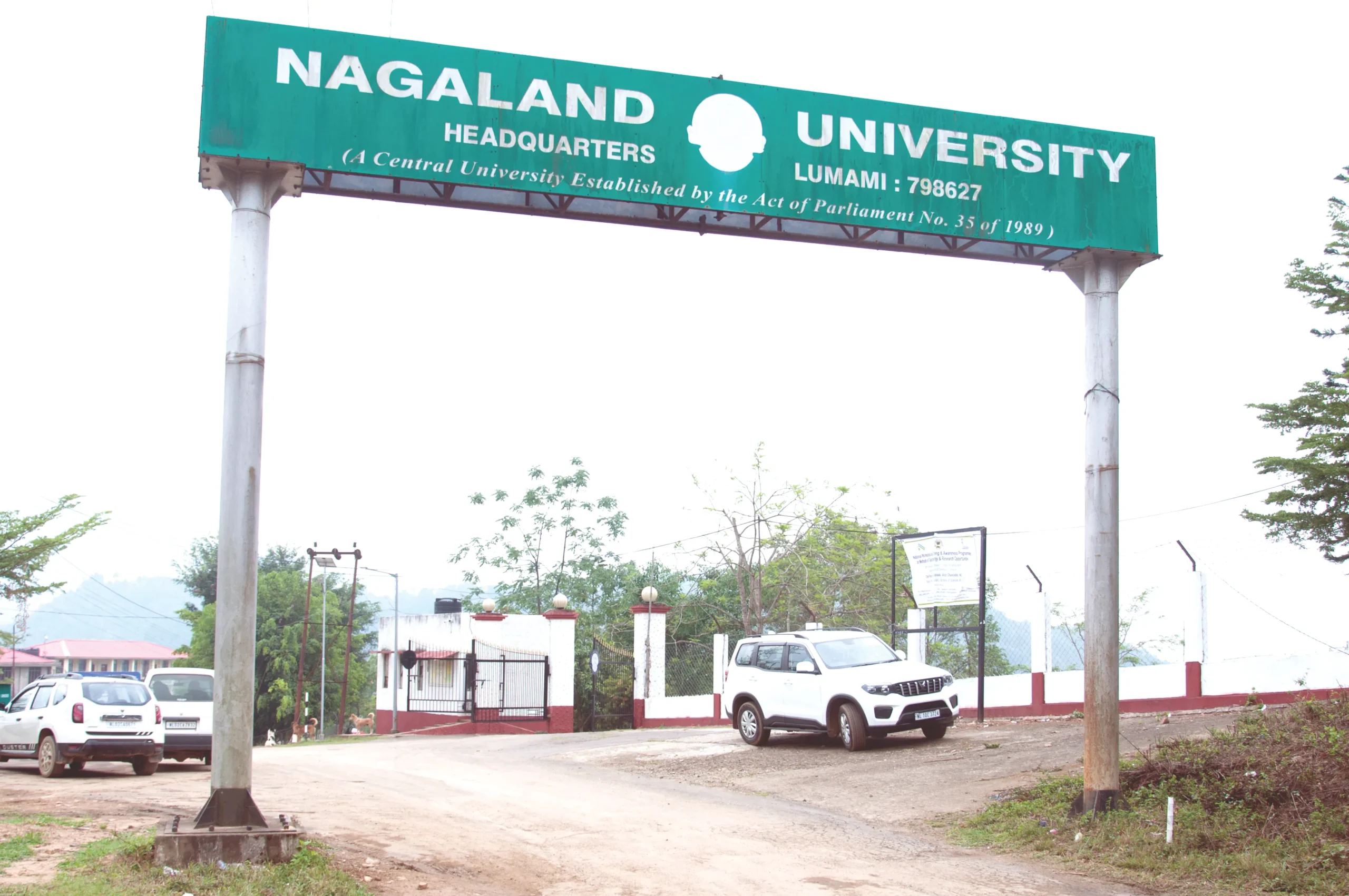
DIMAPUR, NOV 2 (NPN): A research team led by Nagaland University (NU), in collaboration with scholars from institutions across India, has developed a framework to assess how artificial intelligence (AI) could support the preservation of manuscripts, endangered languages, oral traditions and historical records.
The study examines how AI can help safeguard cultural materials threatened by ageing, damage and the loss of traditional knowledge. It stresses that preservation must go beyond digitisation to retain historical accuracy, cultural context and deeper meanings.
The team includes researchers from institutions in Tamil Nadu, Delhi, Uttar Pradesh, Telangana and Karnataka. The findings have been published in Acta Innovations, a peer-reviewed, open-access multidisciplinary journal.
The paper was co-authored by NU Professor Ravi Ranjan Kumar; Major Dr N. Kavitha of Vellalar College for Women, Tamil Nadu; Nisha Sengar of PGDAV College Evening, University of Delhi; Dr Sonia Gouri of ABES Engineering College, Ghaziabad; Dr J. Lalitha Sridevi of Hyderabad; Kumar Sai Deepak B of Sapthagiri NPS University, Bengaluru; and Dr P. Deepavathi of Joy University, Tamil Nadu.
NU vice-chancellor Prof. Jagadish K. Patnaik said the initiative reflected the growing potential of AI in safeguarding India’s diverse cultural heritage and transmitting cultural knowledge to future generations.
He stressed that technological interventions must respect cultural contexts, community rights and ethical considerations.
Explaining the study, Prof. Ravi Ranjan Kumar of NU’s Hindi department said the framework evaluated AI-assisted preservation across nine areas: digitisation accuracy, text recognition, classification, translation, visual reconstruction, descriptive information, cultural context, accessibility and ethics. It combines technical assessments with reviews by subject experts and relevant communities.
“Technical accuracy does not necessarily guarantee cultural accuracy,” Prof. Kumar said, adding that AI systems could transcribe documents or translate spoken words while missing historical references, cultural nuances and the significance of traditions. Expert verification and community consultation were therefore essential, particularly for less commonly used languages, unusual scripts, damaged documents and oral histories.
The study identified five areas where AI could assist preservation: printed and handwritten documents; photographs and artworks; oral histories and endangered languages; archaeological and architectural heritage; and folklore and community knowledge. Potential applications include making historical documents searchable, organising image collections, transcribing oral recordings, translating multilingual materials and creating digital maps and three-dimensional models of heritage sites.
The researchers cautioned that AI should support, not replace, archivists, linguists and cultural custodians. They called for community participation and clear guidelines on data use, privacy and access.
The study also distinguished between restoration, which seeks to preserve or recover existing material, and reconstruction, which could involve inferring missing information. It recommended retaining original digital files, documenting AI-generated changes and clearly indicating uncertainty so users can distinguish original evidence from computer-generated interpretations.
The framework could be particularly relevant to the Northeast, where it could help preserve endangered languages and document oral histories, provided the tools were suited to the languages concerned and communities have a say in how their heritage is recorded and shared.
The authors recommended testing the framework across different collections, scripts and dialects, documenting recognition errors and incorporating expert and community feedback. They also stressed the need to ensure the long-term usability of digital records as technologies and storage systems evolve.