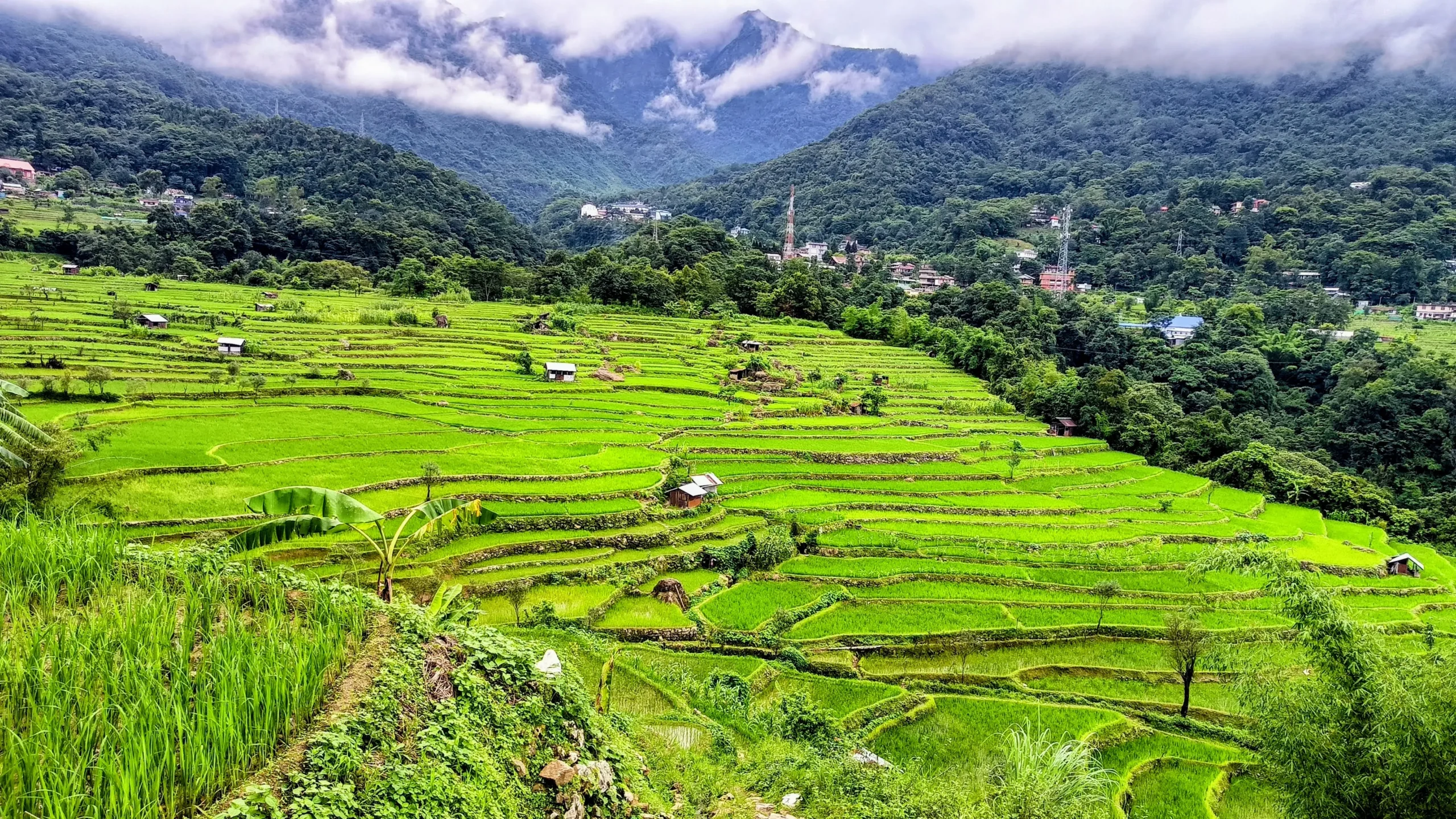
DIMAPUR: A recent Nagaland University (NU) study has shed light on how traditional knowledge continued to sustain terrace farming among the Angami Nagas, offering valuable lessons in sustainable agriculture and food security.
The research, published in a SAGE journal (WoS/Scopus indexed), explores the social, cultural, and ecological systems supporting terrace cultivation — a practice unique to the Angami community amid the state’s predominant shifting agriculture.
Unlike earlier studies that focused mainly on technical aspects, NU said this research delves deeper into the indigenous knowledge systems guiding the practice. It was conducted by research scholar Ketekhoto Neihu under the supervision of Dr. Srikanth Yamsani, Assistant Professor at the Tribal Research Centre, Department of Sociology, NU.
NU vice-chancellor Prof. Jagadish Kumar Patnaik described the study as significant, stating it demonstrated how traditional wisdom sustains agricultural productivity, ecological balance, and community resilience in Nagaland’s hilly terrain. Prof. Patnaik said the sustainability of Angami terrace cultivation rests on the harmonious integration of ecological practices, social cooperation, and cultural traditions. At a time when the world seeks climate-resilient agricultural solutions, he said such research underscored the importance of preserving and learning from indigenous knowledge systems.
The study highlights traditional methods of soil conservation, water management, and organic farming. Angami farmers continue to rely on ecological indicators — such as plant blooming cycles, bird behaviour, and insect activity — for planting, transplanting, and harvesting decisions.
Dr. Srikanth Yamsani noted that while these traditional practices remained strong, farmers were facing new challenges due to changing rainfall patterns and climate variability.
He emphasised the adaptive strength of indigenous knowledge systems. The research suggests that integrating traditional knowledge with modern science could open pathways for sustainable agricultural development, not only in the region but elsewhere in the world.