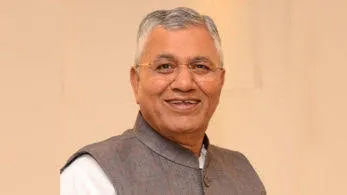
NEW DELHI, JUL 1 (PTI): The chairperson of the joint committee of Parliament which is examining the bills on simultaneous elections said on Wednesday that the panel is in no hurry to submit its report and will hear the views of all stakeholders on the key ‘one nation, one election’ electoral reform.
“It’s not that the government is pushing it for an early submission. The government and Parliament believe that all stakeholders should be heard to get a pulse of what is desired by the people and the country,” PP Chaudhry, BJP MP from Pali in Rajasthan and the panel chairperson, said at a press conference. He was speaking after the committee interacted with Delhi Assembly Speaker Vijender Gupta on the Constitution (129th Amendment) Bill, 2024. The Bill, he asserted, is in the interest of the country, not any political party or the government.
Chaudhary said that the committee is in no hurry to submit its report and added that it will first hear all stakeholders.
“It should not be opposed just because (Prime Minister Narendra) Modi ji has taken this issue into his hands. This is a big electoral reform. There should be some basis for the opposition,” Chaudhary said.
Earlier, the panel held discussions with Chief Minister Rekha Gupta and ministers of the Delhi government at the Secretariat.
In 1967-68, the Congress dissolved 5-7 state assemblies “prematurely” to pave the way for holding simultaneous Lok Sabha and Assembly elections, Chaudhary said at the press conference held at Delhi Assembly premises. “It was not a wrong move; we support it. The same stand should be followed now to move forward,” he said. The Assembly Speaker, during his interaction with the joint committee on the Constitution (129th Amendment) Bill, 2024 and the Union Territories Laws (Amendment) Bill, 2024, opined that synchronising electoral cycles requires consensus and Constitutional safeguards.
The visit of the joint committee was part of its nationwide consultations on the proposed framework for ‘one nation, one election’.
The committee is examining the constitutional, legal, administrative, and electoral implications of simultaneous elections through consultations with governments, constitutional authorities, political parties, and other stakeholders, and will submit its recommendations to Parliament.
Speaker Gupta said that simultaneous elections were the norm in the initial decades after Independence, but political developments and premature dissolution of legislatures gradually led to divergent electoral cycles.