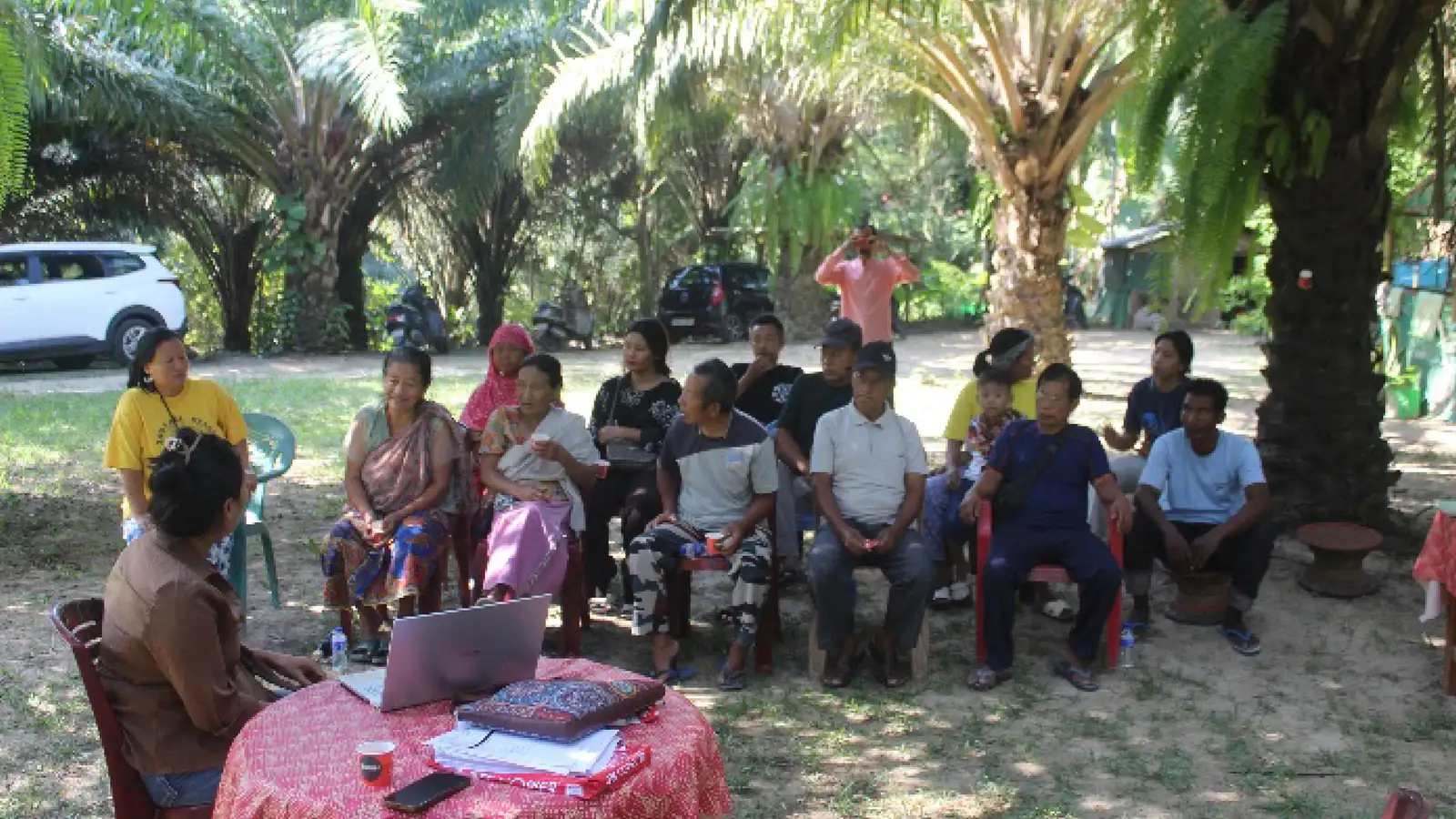
DIMAPUR: The ICAR-All India Coordinated Research Project (AICRP) on Spices under the Department of Horticulture, School of Agricultural Sciences, Nagaland University, Medziphema Campus, conducted two farmers’ training programmes and a field demonstration on “Pest and Disease Management in Ginger and Turmeric” in Chümoukedima and Niuland districts.
More than 60 progressive spice farmers participated in the outreach programme, which was held at Chümoukedima village, Kuxho village and Luzheto village in Niuland district.
The programmes were inaugurated by assistant professor, Dr. Graceli Yepthomi, who highlighted the importance of healthy planting materials and scientific crop management practices for successful ginger and turmeric cultivation.
The technical sessions were conducted by technical assistant (Plant Pathology), Dr. Bendangsenla, and Ravi Shankar. Farmers were trained to identify major insect pests and diseases affecting ginger and turmeric and were introduced to integrated pest and disease management strategies.
The sessions covered rhizome treatment using Trichoderma, hot water treatment and recommended fungicide applications. Farmers were also trained in cultural practices such as field sanitation, proper drainage, safe disposal of infected plant materials, intercropping, crop rotation and timely harvesting.
In addition, practical demonstrations on the use of eco-friendly agricultural inputs were conducted to promote sustainable farming practices.
Each programme concluded with an interactive session where farmers discussed field-specific pest and disease challenges with the scientists and received practical recommendations.
To encourage the adoption of improved cultivation practices, minor farm tools and plant protection inputs were distributed to all participants.
The AICRP on Spices, Nagaland University, stated that it remain committed to empowering local spice growers through continued outreach programmes and the dissemination of science-based farming technologies.