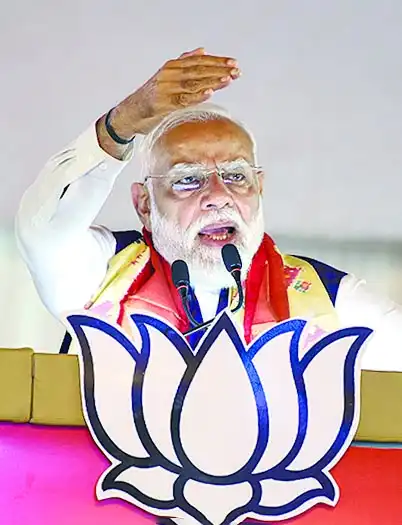
HYDERABAD, MAY 10 (IANS): Pitching for what he described as a “national duty” during a period of global economic instability, Prime Minister Narendra Modi on Sunday called upon citizens to conserve fuel and foreign exchange, revive work-from-home practices, avoid non-essential purchases and support locally made products to help India withstand the economic fallout of the ongoing war in West Asia.
Addressing a massive BJP public meeting at Parade Grounds, Modi said the world was facing severe supply chain disruptions and rising inflation due to successive global crises, beginning with the Covid pandemic and later aggravated by the Ukraine conflict and the current tensions in West Asia.
The Prime Minister warned that India, heavily dependent on imports for petroleum products, cooking gas and fertilisers, was among the countries significantly affected by the global surge in prices.
“We don’t have big oil wells. We have to import petrol, diesel and gas. The prices of petrol, diesel, gas and fertilisers have skyrocketed,” Modi said, adding that the Centre had been bearing a substantial financial burden over the last two months to protect citizens from the full impact of the crisis.
Calling for collective participation, Modi said patriotism was not limited to sacrificing one’s life for the nation but also meant living responsibly and discharging one’s duties during challenging times.
He stressed that saving fuel was directly linked to protecting India’s foreign exchange reserves and urged people to reduce dependence on private vehicles by using Metro rail, buses and other public transport systems wherever available. He also encouraged citizens to opt for car-pooling, greater use of electric vehicles and railway transport for transportation of goods.
Referring to systems developed during the Covid-19 pandemic, Modi urged institutions and companies to revive work-from-home arrangements, virtual meetings and online conferences to cut down unnecessary travel and fuel consumption.
“During the Corona period, we became accustomed to work from home, video conferences and online meetings. The need of the hour is that we restart those practices in the national interest,” he said. The Prime Minister also appealed to citizens to avoid unnecessary overseas travel, destination weddings and foreign vacations and instead promote domestic tourism and celebrations within the country.
In another significant appeal, Modi advised people to refrain from non-essential gold purchases for one year, saying such imports placed additional pressure on India’s foreign exchange reserves.
Emphasising self-reliance and economic nationalism, Modi urged citizens to prioritise Made-in-India goods and locally manufactured products, including everyday items such as shoes, bags and accessories.
He also appealed to households to reduce edible oil consumption, saying it would not only improve public health but also reduce the country’s import burden.
Addressing farmers, the Prime Minister called for a 50% reduction in chemical fertiliser use and urged wider adoption of natural farming methods to improve soil health and lower import dependency. He also encouraged farmers to increasingly adopt solar-powered irrigation pumps instead of diesel-operated systems.
Highlighting government support measures, Modi pointed out that while fertiliser bags were being sold globally at around Rs 3,000, Indian farmers were receiving the same for less than Rs 300 because of government subsidies.
“When the global supply chain remains under crisis, difficulties continue to rise despite all efforts. Therefore, we must now fight unitedly, keeping the country and Mother India first,” the Prime Minister added.