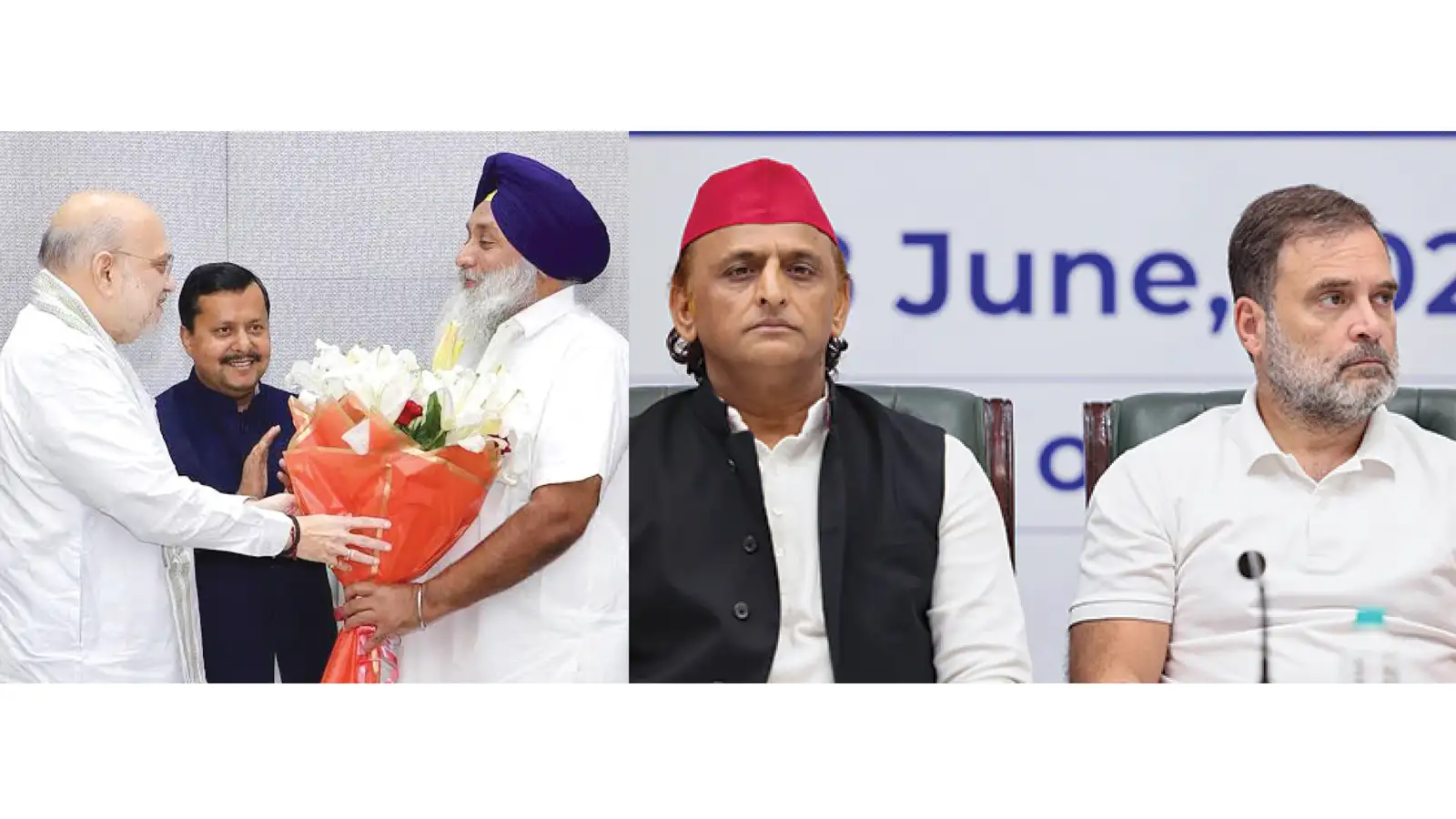
NEW DELHI, NOV 24 (AGENCIES): Congress’s alliance arithmetic is under strain in Uttar Pradesh even as the BJP has moved to rebuild its Punjab partnership with the Shiromani Akali Dal, setting up contrasting tests of coalition management ahead of the 2027 Assembly elections. One alliance is being revived after a six-year split, while the other is struggling to turn a shared anti-BJP objective into a workable seat-sharing arrangement.
UP: The Congress and Samajwadi Party (SP) have begun formal negotiations for the 2027 Uttar Pradesh polls, but their opening positions remain far apart. Congress leaders have told the SP that the party wants to contest more than 100 of the state’s 403 Assembly seats and seeks at least one constituency in each of its 75 districts. The SP is reportedly considering offering about 26 seats.
The Congress had initially sought as many as 200 seats, while SP chief Akhilesh Yadav publicly put its demand at 181. Congress negotiators have since narrowed their list to around 140–150 constituencies but continue to describe more than 100 seats as a “respectable” share.
Both parties have publicly projected optimism, saying a broad consensus has been reached and final numbers could be settled within days. However, the Congress wants a substantial national-party presence in India’s largest state, while the SP sees itself as the principal opposition force and is reluctant to concede constituencies it believes it can win.
For the Congress, a failed or weak seat-sharing arrangement could leave its candidates contesting unwinnable seats, weaken its organisational position in Uttar Pradesh and allow the BJP to portray the opposition as divided. For the SP, conceding too many seats could dilute its electoral base and complicate its claim to lead a future non-BJP government.
Punjab: The BJP and Shiromani Akali Dal (SAD) have formally revived their partnership for the 2027 Assembly election, ending a separation that followed the farm-law protests of 2020 and included sharp public exchanges between the parties.
The reunion was announced in New Delhi by BJP president Nitin Nabin, Union Home Minister Amit Shah and SAD president Sukhbir Singh Badal. The parties have said they will contest all 117 Punjab Assembly seats together, although the precise seat-sharing formula is yet to be finalised.
The BJP’s approach has been to set aside past differences, offer the Akalis a credible role and create a united alternative to the ruling Aam Aadmi Party (AAP). The SAD gains a national ally, organisational support and a route back into a state where its traditional support base has been under pressure.
AAP and Congress: AAP enters the Punjab contest as the incumbent. The BJP’s criticism that AAP’s “Badlav” benefited Chief Minister Arvind Kejriwal rather than Punjab signals a direct challenge to the ruling party. It also underlines that the principal contest is taking shape between AAP and the revived BJP-SAD alliance.
The Congress, meanwhile, faces pressure from both sides. In Punjab, it must contend with the incumbent AAP government and a reunited BJP-SAD alliance. In Uttar Pradesh, it is negotiating from a weaker position with a larger regional partner. Unless it secures a credible number of seats, clear campaign responsibilities and a convincing political narrative, it risks becoming a supporting player in both states.
The BJP-SAD reunion shows that former allies who traded accusations can rebuild a partnership when they see electoral value in cooperation.
The Congress-SP negotiations, by contrast, highlight the difficulty of entering talks with a high demand and limited bargaining leverage. The Congress’s insistence on more than 100 seats may be intended to protect its national identity and organisational presence.
But if the SP is unwilling to meet that figure, the Congress will have to weigh whether a smaller, carefully selected share would serve it better than no alliance at all.