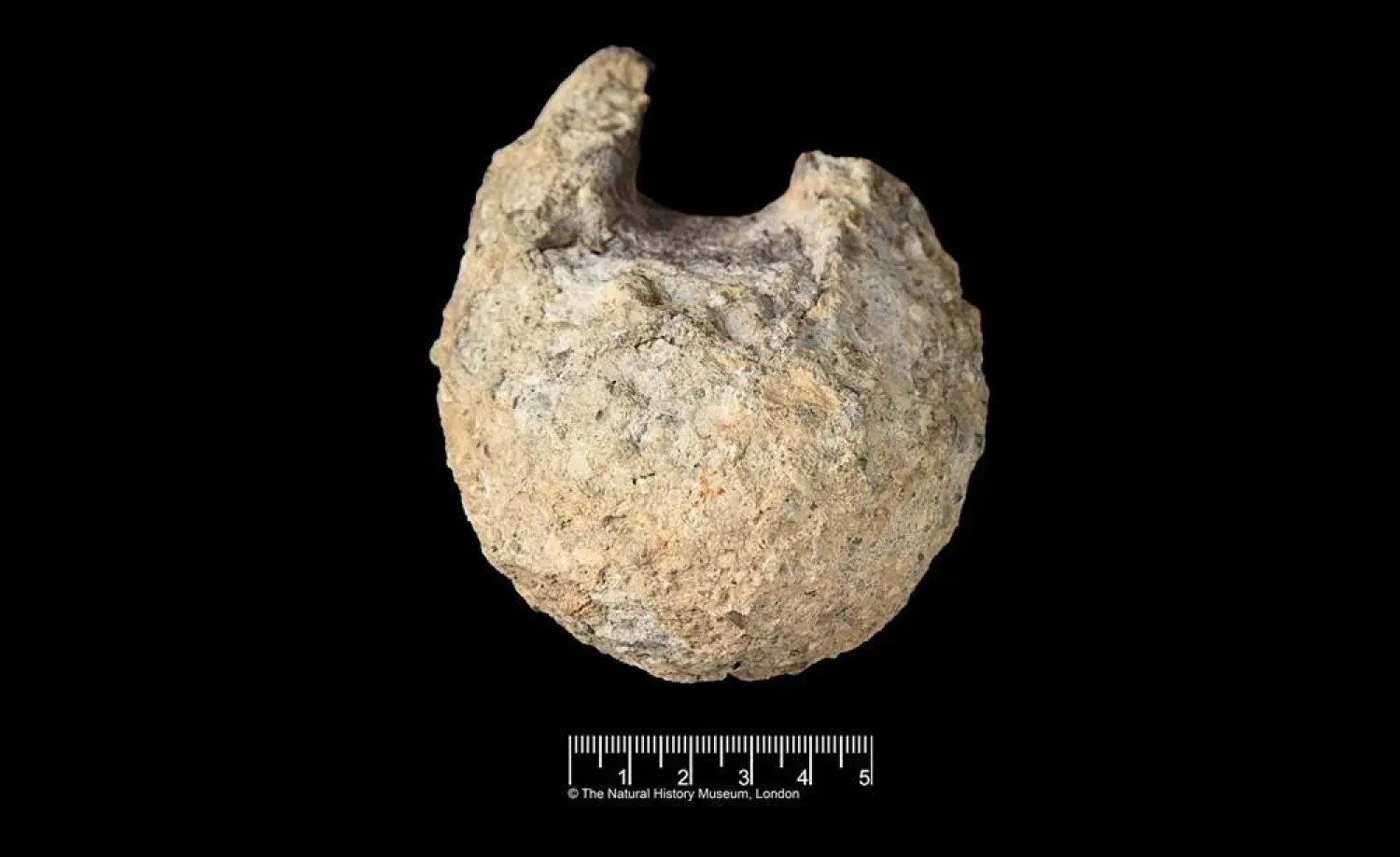
Scientists have identified a rare dinosaur fossil from Antarctica that spent more than 40 years tucked away in a drawer after it was mistakenly labeled as a reptile bone.
The fossil — a tail bone from a long-necked, plant-eating titanosaur — was originally collected in 1985 during an expedition to James Ross Island by geologist Mike Thomson, who was working with the British Antarctic Survey to map the region’s rock layers, according to the Associated Press. At the time, Thomson recorded the specimen as belonging to a large reptile.
Years later, paleontologist Mark Evans spotted the fossil in the British Antarctic Survey’s collection and suspected it might actually belong to a dinosaur.
After comparing the bone with other dinosaur fossils, researchers confirmed it came from a titanosaur, according to findings published Monday, June 29, in the journal Acta Palaeontologica Polonica.
Dinosaur fossils are exceptionally rare in Antarctica because most of the continent is covered by thick ice, according to the AP. But around 70 million years ago, Antarctica looked dramatically different, with forests covering the landscape and dinosaurs roaming the region, Paul Barrett, co-author of the study and a researcher at the Natural History Museum in London, told the outlet.
Scientists estimate the dinosaur measured about 23 feet long, making it relatively small for a titanosaur, and believe it may have been a juvenile when it died. They suspect its body drifted into the sea before eventually becoming fossilized in marine rock.
Never miss a story — sign up for PEOPLE’s free daily newsletter to stay up-to-date on the best of what PEOPLE has to offer, from celebrity news to compelling human interest stories.
Thomson died in 2020 before learning that the bone he collected had actually belonged to a dinosaur.
“If he were still with us, he would be delighted to know what this was,” Evans said.
(Yahoo News)