
Correspondent
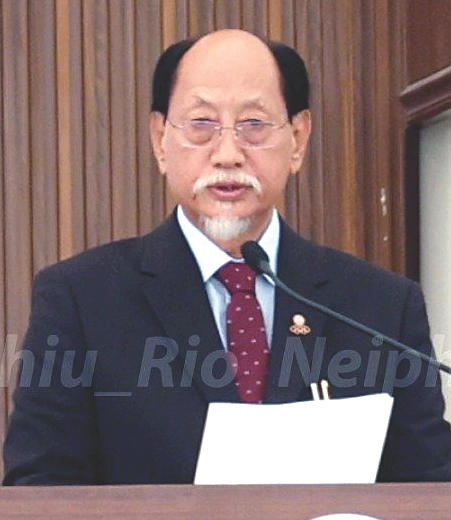
KOHIMA, NOV 28 (NPN): State chief minister Neiphiu Rio on Saturday described the return of 39 Naga ancestral human remains from the Pitt Rivers Museum, University of Oxford, United Kingdom, after more than a century, as a historic moment symbolising the restoration of Naga identity, dignity and collective memory. Addressing the public homecoming ceremony at the NBCC Convention Hall, Kohima, Rio said the occasion recalled the painful colonial past and demonstrated what unity could achieve.
Transported in eight boxes, the remains were received by representatives of Naga tribal bodies, community leaders, elders, the Forum for Naga Reconciliation (FNR), other organisations and state officials. A mass burial is scheduled at Naga Solidarity Park on November 30.
The remains belong to eight Naga tribal communities, with the Phom community accounting for the largest number at 24. The other communities include Konyak, Yimkhiung, Khiamniungan, Sümi, Tangkhul and Pochury, among others.
Rio acknowledged the contributions of the FNR, led by Rev. Dr. Wati Aier, and the Recover, Restore and Decolonise (RRaD) initiative, coordinated by Dr. Ellen Konyak Jamir, along with researchers, volunteers, tribal Hohos and the 28-member delegation that accompanied the remains. He also appreciated the cooperation of the Pitt Rivers Museum and the University of Oxford.
Highlighting the State Government’s role, Rio said a Ministerial Committee headed by Deputy Chief Minister Y. Patton was constituted to oversee the process, with state departments and Central ministries coordinating the necessary clearances and transportation.
He also recalled writing to the Ministry of External Affairs in October 2024 to prevent the auction of a 19th-century Naga human skull in the UK, following which the auction house withdrew it from sale and exhibition.
Rio said repatriation was not merely about bringing back human remains but restoring dignity and recognising the historical and cultural rights of indigenous communities. He expressed hope that the homecoming would promote healing, strengthen unity and inspire collective responsibility, adding that the ancestors should now be laid to rest in their homeland with peace, dignity and reverence.
Professor Dr. Dolly Kikon, member of the RRaD team constituted by the FNR, described the homecoming as a “Naga Odyssey of the 21st century”, representing a collective testimony of Naga identity, history and dignity.
She said the team had worked voluntarily since 2020 alongside tribal Hohos, community leaders, churches and educational institutions to ensure a transparent and inclusive process. Kikon said the return of the ancestors was an important step towards restoring their humanity and confronting the legacy of colonial violence, when they were treated as objects and specimens in a foreign land. Remembering peace advocates Dr. Phyobemo Ngully and Niketu Iralu, she said their contributions remained an inspiration.
Rev. Dr. Wati Aier, speaking on “The Journey Home—The Homecoming of Our Ancestors and the Hope of Christ”, said the occasion offered an opportunity to acknowledge painful history, heal past wounds and bring closure to generations of loss. Emphasising “redemptive memory”, he urged the Naga people to remember history in ways that promoted healing and reconciliation rather than hatred and revenge. He also described the homecoming as a theological moment, calling for a future built on faith, peace, unity and mutual respect.
Naga Students’ Federation president Mteisuding Heraang called for greater unity, cautioning against tribalism, factionalism and narrow interests. He stressed that tribal identities should complement rather than overshadow the collective Naga identity.
Highlighting challenges facing Naga youth, including unemployment, lack of vocational skills and dependence on government employment, Heraang called for sustainable economic opportunities and stronger skill development. He also urged tribal Hohos and senior leaders to strengthen the Naga Hoho as an inclusive and credible platform, saying the ancestors had found their way home and it was now the responsibility of the living to find their way back to one another.
On behalf of the Naga tribal Hohos, Sumi Hoho president and Nagaland Tribal Hohos Coordination Committee secretary Dr. Vihuto Asumi and Tangkhul Naga Long vice president R.S. Jollyson shared their remarks. Neingulo Krome, secretary general of the Naga People’s Movement for Human Rights, spoke on “From Objects to Human Dignity”.
The programme was chaired by Rev. Dr. Ellen Konyak, coordinator of RRaD. Angami leader Mialo-u Kuotsu pronounced the traditional welcome, “Welcome to the Land”, while the invocation was offered by Rev. Dr. Rachülie Vihienuo, executive director of ABCC.
The Oriental Theological Seminary Choir presented “Healing of Our Spirit”, while the Nagaland College of Music and Fine Arts presented “Hallelujah”. Words of gratitude were delivered by N.T. Thamlong Phom, vice president of Phom Peoples’ Council and co-convenor of the Local Arrangement Committee. The benediction was pronounced by Rev. Father Kokto Kurian, diocesan youth director, Diocese of Kohima.