
Minister of Women Resource Development, Salhoutuonuo Kruse, participated in the two-day National Textiles Ministers’ Conference organised by the Ministry of Textiles, Government of India, on January 8 and 9, held at Guwahati, Assam. The conference, themed “India’s Textiles: Weaving Growth, Heritage & Innovation,” brought together textile ministers and senior officials from across the country to discuss the sector’s future amid global and domestic challenges.
During the sessions, Kruse highlighted the untapped potential of Nagaland’s textile sector, rooted in traditional handlooms and handicrafts. She underscored that tribal artisans produce unique, eco-friendly weaves using natural fibres like cotton, bamboo, and nettle, aligning with global sustainability demands. However, the sector faces challenges due to a lack of modern infrastructure, limiting production scale and market access.
Kruse urged the Ministry of Textiles to prioritise the establishment of an Integrated Textile Park (ISTP) in Nagaland under the Scheme for Integrated Textile Parks (SITP). Currently, Nagaland has no approved parks, unlike 59 across the country. An ISTP in Dimapur or Kohima could integrate handloom clusters with world-class facilities for weaving, dyeing, and finishing, creating employment for artisans, mostly women, and attracting high-value investment while supporting the Act East Policy and regional trade.
She further called for focused investments under the Production Linked Incentive (PLI) Scheme, particularly in technical textiles derived from bamboo and natural dyes, to leverage Nagaland’s cultural and ecological strengths. Kruse proposed ring-fencing Rs. 500 crore for private investment in integrated units and the creation of a joint task force between the Ministry of Textiles and the Nagaland government to fast-track approvals, map opportunities, and pilot sustainable textile hubs by FY 2026–27.
She also requested the formation of a joint task force comprising the Ministry of Textiles and the Government of Nagaland to map opportunities, fast-track approvals, and pilot sustainable hubs by FY 2026–27. This initiative will strengthen resilient supply chains, empower women artisans, and position Nagaland as a model state for green textiles in India.
She said These measures will provide excellent opportunities to highlight Nagaland’s unique contributions to India’s natural fibre landscape and seek targeted interventions for growth.
Kruse was accompanied by the additional director, Industries & Commerce, executive engineer, Industries & Commerce, and assistant director, Women Resource Development.
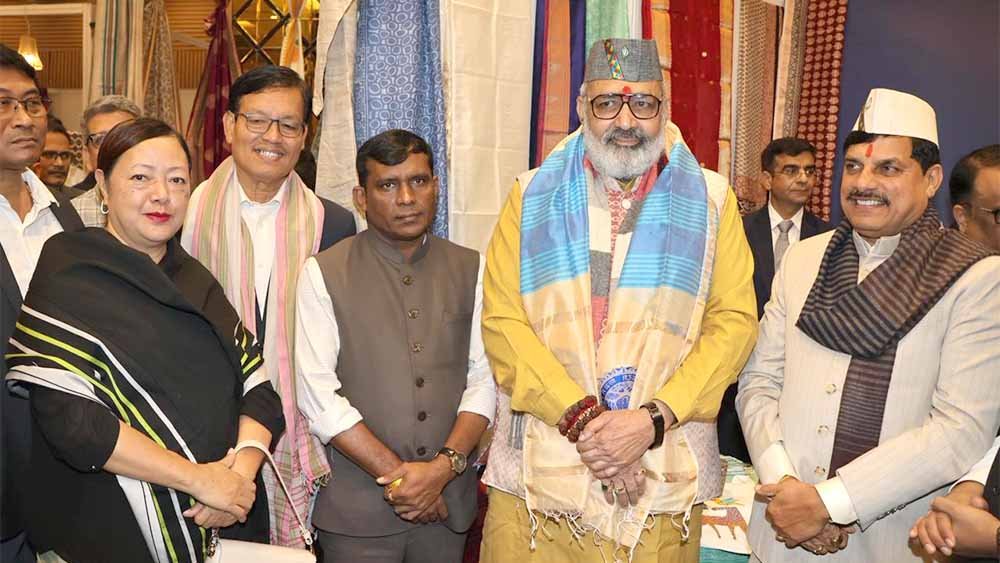
Salhoutuonuo urges textile investments for Nagaland artisans
CorrespondentKohima, Jan 8(NPN)