
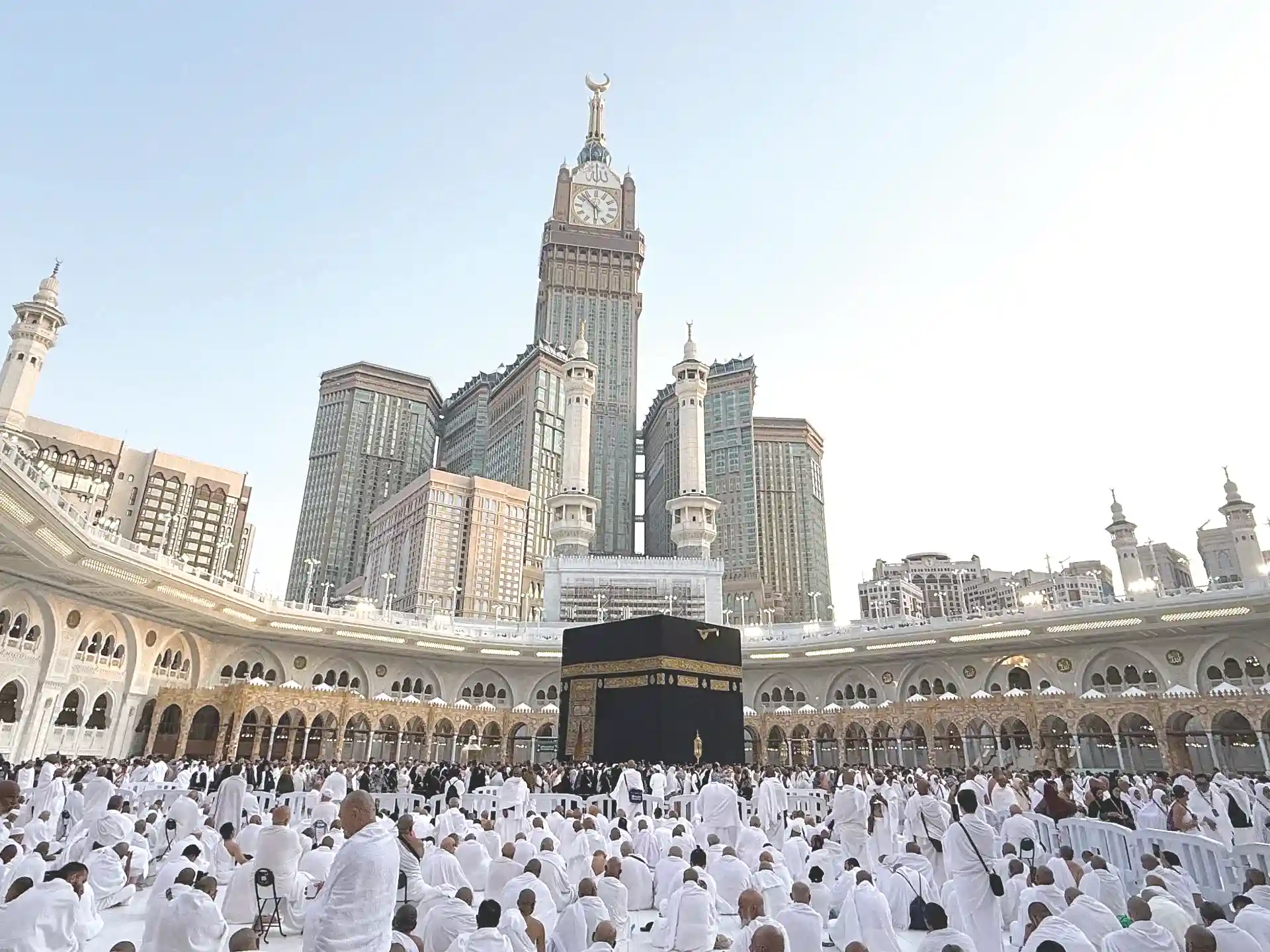
Cairo, Sep 16 (AP): Saudi Arabia accused Yemen’s Iran-backed Houthi rebels overnight of trying to attack Islam’s holiest city, prompting condemnation from countries in the region but no sign of military support. The kingdom, a key US ally, declared Mecca a “red line” as it slid deeper into the new front of the Iran war.
With the world’s biggest oil exporter under fire from the rebels backed by the Saudis’ regional adversary, Tehran, the kingdom needs a safe outlet for its crude as well as military assistance. A path to either one remains unclear.
A crucial Saudi pipeline is reportedly shut down for weeks after an attack. The Yemen-based Houthis have been targeting infrastructure in the kingdom as well as its shipping on the Red Sea, where they have seized several islands on the Bab el-Mandeb Strait. And Iran is still targeting ships in the Strait of Hormuz. Oil prices remain above USD 100 a barrel.
The Houthis denied firing drones toward Mecca, about 1,100 kilometres (680 miles) from Yemen’s border. The Saudis said they intercepted and destroyed the drone before it entered the airspace over the birthplace of the Prophet Muhammad.
Turkiye and Pakistan say the Saudis haven’t asked for help
The attacks are the first test of a new defence pact among Saudi Arabia, NATO member Turkiye and nuclear power Pakistan. But officials from Turkiye and Pakistan told The Associated Press they have not received a Saudi request for support in response to the Houthis’ escalation.
The Turkish official added that efforts to “institutionalise” the alliance need to be completed before the pact becomes operational. The officials spoke on condition of anonymity because they were not authorized to speak publicly on the issue.
As part of the condemnation of the attempted drone attack on Mecca, Pakistani Prime Minister Shehbaz Sharif said his country and the Saudis stand “unwaveringly, shoulder to shoulder.” Criticism also came from the Organisation of Islamic Cooperation, representing over 57 Muslim states, which said the attempt violates the “sanctity of holy sites.”
This was the second attempted attack by the Houthis against Mecca after the rebels fired a ballistic missile toward the city in 2017, according to Col. Turki al-Maliki, spokesperson for the Saudi-led military coalition fighting the rebels.
Houthis claim shooting down an F-15 fighter jet
Later Wednesday, the rebels claimed, without offering evidence, that they shot down an F-15 fighter jet operated by the Saudi-led coalition over the central province of Marib. Houthi military spokesperson Brig. Gen. Yahya Saree didn’t say when it occurred, and the AP couldn’t independently verify the claim.
The rebels at times take days to claim attacks.
Spokespeople for the Saudi-led coalition and the Saudi government didn’t immediately respond to a request for comment.
For now, the US is staying out of the fight
The United States has sold billions of dollars in weapons to Saudi Arabia and has committed to providing training and other support to protect the kingdom, but top US officials in recent days have indicated a lack of desire to get involved in the conflict.
“The Houthis called us, and they don’t want to fight with us,” US President Donald Trump said Saturday, adding that the rebels appear focused on the Saudis.
Vice President J.D. Vance on Monday said Washington had been in “constant contact” with the Saudis and had been “engaged in direct conversations with the Houthis themselves,” calling it “a very fluid and dynamic thing” to be monitored.
On the ground, forces with Yemen’s internationally recognised government have said they are regrouping to combat the Houthis after fleeing the rebels’ advance. But those forces are a collection of armed groups with varying aims.
Iran’s top diplomat is in China
While Saudi Arabia appeared to face the choice of pursuing diplomacy or taking the fight to the Houthis, the top diplomat for rival Iran was in China, the biggest buyer of Iranian oil.
Chinese Foreign Minister Wang Yi called on the US and Iran to exercise restraint and reopen the Strait of Hormuz as soon as possible, and expressed China’s concern about the fighting’s spread to Yemen and the Red Sea, according to China’s foreign ministry after the meeting with Abbas Araghchi.
There was no immediate comment from Araghchi afterwards.
China has avoided direct involvement in the war, but President Xi Jinping at the BRICS summit in New Delhi over the weekend again offered Beijing’s help in ending it.
Oil flows through the Strait of Hormuz have recovered somewhat as tankers risk using a route near Oman on the other side of the waterway, with guidance from US forces. Estimates vary because ships can turn off location systems, but range from 5 million to 7 million barrels per day on average, less than half the amount before the war began with US and Israeli strikes on Iran on Feb. 28.
Saudi crown prince seeks Egypt’s backing
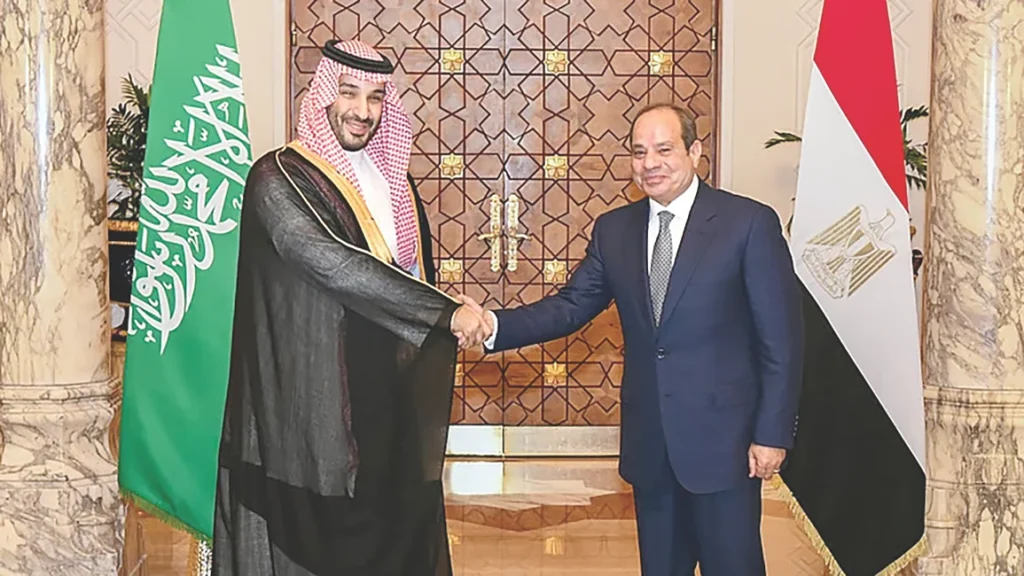
Cairo, Sep 16 (AP): Saudi Arabia’s crown prince sought backing Tuesday from the president of Egypt, his ally across the Red Sea, as the kingdom faces increased attacks by Yemen’s Houthi rebels on Saudi shipping and infrastructure that have helped drive a surge in global oil prices.
Saudi Arabia has largely been on its own in confronting the Iranian-backed rebels, who rapidly captured more territory in Yemen over the past week and strengthened their ability to choke off Saudi oil exports out of the Red Sea.
The vulnerability of the kingdom’s oil production was further underscored by an attack days ago that damaged its biggest pipeline. The strike was reportedly carried out by Iran’s allied militias in Iraq. It means the East-West Pipeline will be largely shut down for weeks as it is repaired, regional officials say, likely taking several million barrels of oil a day off the market.
The Houthi offensive has opened up a new front in the Mideast’s war and boosted the hand of Iran, Saudi Arabia’s traditional archrival in the region, which has attacked shipping through the region’s other major maritime route, the Strait of Hormuz in the Persian Gulf. Crown Prince Mohammed bin Salman met in Cairo with Egyptian President Abdel-Fattah el-Sissi.
The crown prince said in a statement that they both confirmed “their shared commitment to ensuring freedom and security of maritime navigation” in the Red Sea and the Bab el-Mandeb Strait, the choke point at the sea’s southern end. El-Sissi’s office put out a statement expressing “Egypt’s unwavering position in supporting Saudi Arabia.”
Neither side gave firm details on any future steps. While Egypt is unlikely to offer military help to Saudi Arabia, the country is influential in the Arab world and can help rally support. Egypt has been at the center of mediation efforts in the last three years of turmoil in the region, keeping open relations with all parties, including Iran and its allies.
The kingdom looks for support as it faces tough choices
In recent days, Houthi fighters made dramatic advances, seizing the Red Sea port of Mokha and three strategic islands in and near the Bab el-Mandeb Strait.
The gains have further improved the Houthis’ position to seal off the strait to Saudi shipping, which they have been attacking since late July. Bab el-Mandeb connects the Red Sea to the open ocean and, from there, to Saudi Arabia’s biggest oil customers in Asia.
Saudi Arabia has so far seemed reluctant to unleash a major military campaign against the Houthis, wary of bringing greater Houthi attacks on its oil infrastructure and being dragged back into an all-out civil war in Yemen, its southern neighbor.
But as Houthi attacks continue, the kingdom faces a potential decision about whether to step up its military response or seek a diplomatic solution.
Saudi military spokesperson Maj. Gen. Turki al-Malki said its air defense forces intercepted and destroyed a drone Tuesday evening before it entered the airspace over Mecca, Islam’s holiest city and a focal point for followers of the faith. It’s the birthplace of Prophet Muhammad, where Muslims believe he first received God’s revelations of the Quran, and the location of the Kaaba, the black, cube-shaped structure that Muslims around the world turn to five times a day when praying.
The security of the holy city is “a red line,” he said, adding that Saudi forces will not hesitate to act against “hostile and terrorist behavior.”
The Houthis denied firing drones toward Mecca.
The Saudis’ most essential ally, the United States, has been unpredictable and sometimes unreliable. U.S. President Donald Trump seems reluctant to widen an already unpopular and stalemated Mideast war ahead of congressional elections. The United Arab Emirates, previously a partner in the Saudi-led coalition against the Houthis, has withdrawn from the war after conflicts between its allies in Yemen and Saudi Arabia’s.
Yemen’s U.N. Ambassador Abdullah Al-Saadi told the U.N. Security Council on Tuesday that Yemen’s armed forces are regrouping and regaining control but called for a U.N. arms embargo against the Houthis to be enforced and the council to condemn the escalation.
He asked “whether the international community will accept for one of the world’s most important gateways for trade and energy to become a blackmail card in the hands of a transnational terrorist group.”
Egypt has been hurt as well by the Houthi campaign
Houthi attacks on Red Sea shipping during the war in Gaza led to a decrease in traffic through the Suez Canal, gouging Egypt’s revenues. During the Iran war, Saudi Arabia redirected its oil exports through the Red Sea, much of it going through the Suez Canal or through an Egyptian pipeline from the Red Sea to the Mediterranean. But the shutdown of the East-West Pipeline is likely to greatly reduce or end those shipments for weeks.
There are limits to the help Egypt can give.
“I don’t think MBS wants troops from Cairo, which he knows would be a very difficult ask,” said analyst H.A. Hellyer, using the crown prince’s initials.
Instead, Cairo can give the Saudis political backing among Arab nations for whatever steps they take against the Houthis, said Hellyer, a senior fellow at the Center for American Progress. “There’s genuine international consensus that the Houthis cannot be allowed to hold a choke point like Bab el-Mandeb hostage,” Hellyer said. But some nations are wary about working with Saudi Arabia because of past experience in Yemen.
The coalition that Prince Mohammed first put together to fight the Houthis in 2015 largely fell apart years ago because of infighting and factionalism.
“MBS is keenly aware of this and will be trying to make it clear there is a much better plan for going forward,” Hellyer said. “It just depends on how many are convinced.”