
The Research Committee and Institution Innovation Council of Sazolie College organised a one-day workshop on “Research Methodology” for post-graduate students and faculty members at the college conference hall on April 23.
In the first session, associate professor, Department of English, Nagaland University, Dr. R. Vasanthan, delivered a presentation on “Methodological Trends in Research and Paper Publication.” He explained emerging methodological approaches in academic research and outlined key aspects of scholarly publishing.
He highlighted the role of Scopus, a database managed by Elsevier that indexes high-quality scholarly literature, and elaborated on Clarivate Analytics and citation counts as important indicators of research impact. He also provided guidance on the process of paper publication.
In the second session, assistant professor, Department of Management, Nagaland University, Dr. Dhrubajyoti Bordoloi, spoke on “Artificial Intelligence and Ethics in Research.” He discussed the evolving AI landscape in India and emphasised issues related to plagiarism and the UGC Regulations 2018. He further explained the layers of the Saunders Research Onion as a framework for structuring research methodology.
Dr. Bordoloi also outlined twelve essential research tools for social science and business management, stating that six of these tools focused on search and discovery applications, three on reading and understanding research, and three on writing and organisation.
The programme was chaired by assistant professor, Department of Management, Kelhoukhrietuo Nagi, while the vote of thanks was delivered by assistant professor, Department of History, Dr. Medosano Mary.
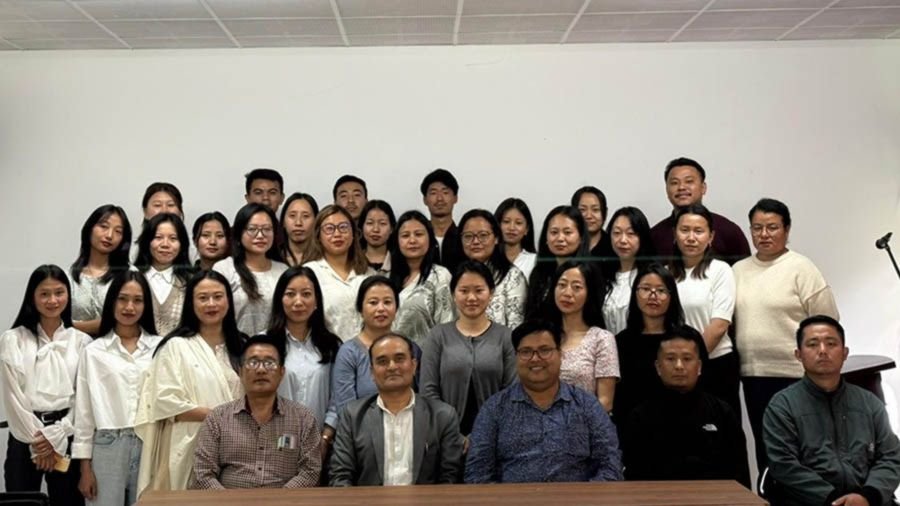
Sazolie College holds workshop on research methodology
Correspondent
SourceNPN