
Staff Reporter
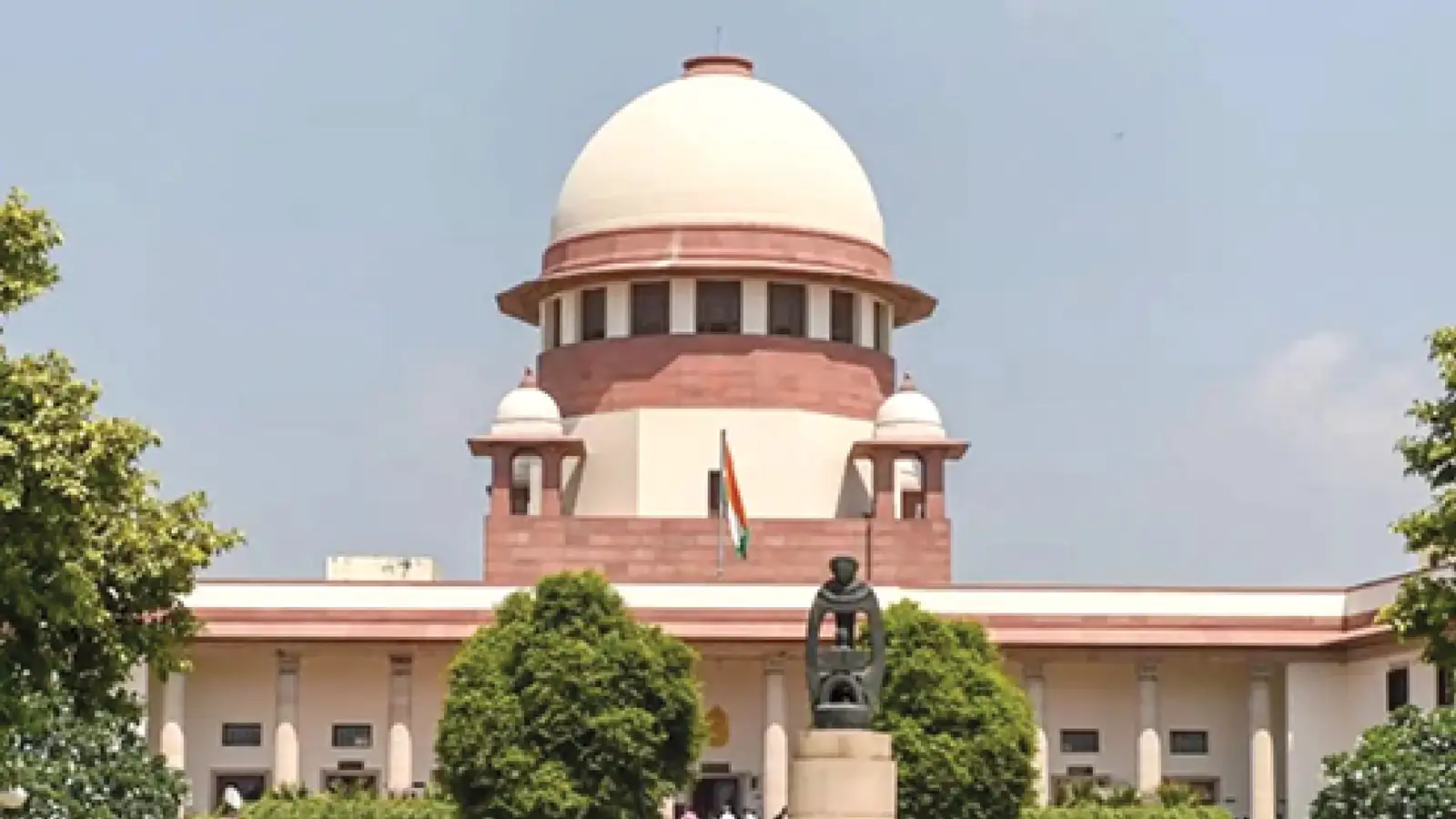
DIMAPUR, NOV 17 (NPN): The Supreme Court has upheld the recruitment process undertaken by the Department of Excise and Prohibition for 46 Excise Constable posts, dismissing an appeal challenging the introduction of a written examination after the initial recruitment advertisement.
In a judgment delivered on November 16, a division bench comprising Justices Prashant Kumar Mishra and Shree Chandrashekhar found no grounds to interfere with the June 23, 2026 judgment of the Gauhati High Court, Kohima Bench, which had upheld the State government’s decision to include a written examination in the selection process.
The appeal was filed by T. Akon Phom and 15 others against the State of Nagaland and others, challenging the legality of a June 4, 2025 corrigendum that introduced the written examination after the original advertisement had prescribed only a physical test and suitability test/viva-voce.
The recruitment advertisement, issued on April 7, 2025, invited applications from indigenous inhabitants of Nagaland for 40 Excise Constable posts, with Class 8 as the minimum educational qualification. Six additional posts were subsequently notified, taking the total vacancies to 46.
Initially, the selection process comprised a physical test and suitability test/viva-voce. However, the Departmental Recruitment Board subsequently introduced a written examination, prompting objections from candidates who argued that the selection criteria could not be changed after recruitment had commenced.
The court observed that the recruitment was governed by the Nagaland Excise Service (Revised) Rules, 1999, which provided for direct recruitment through “competitive examination/selection”. It held that the written examination, based on the prescribed Class 8 standard, fell within the scope of the existing rules and did not violate them.
The court took note of the large number of applicants against the limited vacancies. The State government informed it that 11,521 applications had been received for the 46 posts. Of these, 5,985 candidates appeared in the physical test and 2,297 qualified for the next stage.
It observed that an objective written examination provided a common basis for assessing candidates and reduced disproportionate reliance on the comparatively subjective assessment involved in a viva-voce. The written examination carried 100 marks against 12 marks for the viva-voce, which the court held did not make the selection process arbitrary.
The court also noted that the corrigendum had been widely publicised, including in Nagaland Post and Eastern Mirror, and that all candidates who qualified in the physical test were subjected to the same requirement and given equal opportunity.
On the contention that the recruitment should have followed a 2016 memorandum prescribing physical and medical standards, the court observed that the memorandum had neither been confirmed by the Selection Board nor notified by the State government. It had also not been strictly enforced in previous recruitment processes and, at its highest, prescribed minimum physical and medical standards for athletic activities.
The judgment further recorded that the Departmental Recruitment Board had finalised the selection of 46 candidates by June 30, 2026. The selected candidates were notified on June 29, and all conveyed their acceptance between July 1 and 8. However, the process remained in abeyance due to the pending litigation.
Supreme Court held that the competent recruiting authority had the discretion to devise appropriate selection and shortlisting procedures where the applicable recruitment rules did not prescribe a detailed method.
Accordingly, it dismissed the appeal, leaving intact the Gauhati High Court’s judgment upholding the recruitment process.