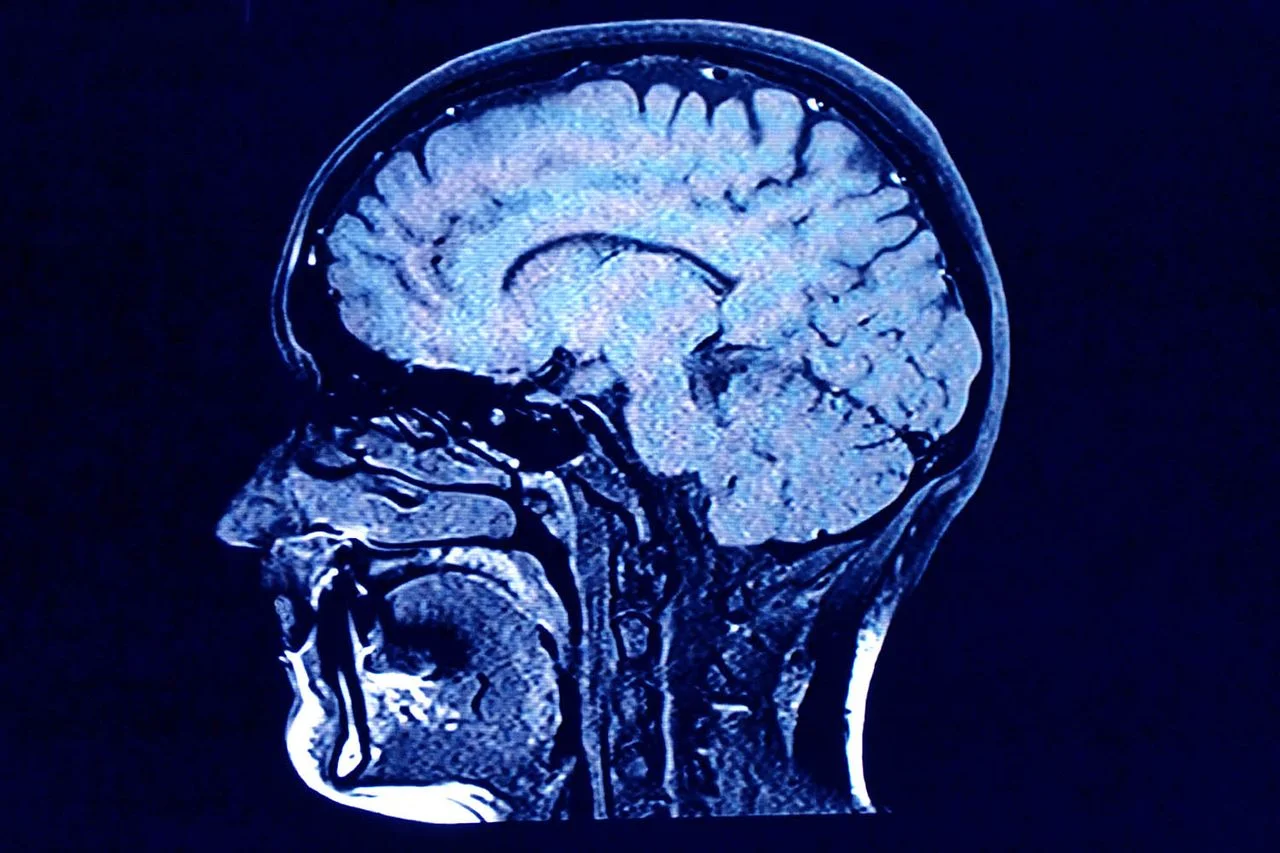
Scientists at Stanford University have discovered that the brain may consist of two separate organs that evolved independently over millions of yearsOne system controls vital functions like breathing, while the other handles higher-level thinking like language and consciousnessThe discovery could advance research into conditions affecting the brainstem, like Amyotrophic lateral sclerosis (ALS), also called Lou Gehrig’s disease and spinal muscular atrophy
The brain might be made up of two separate organs that work together, rather than existing as one single unit, scientists now believe.
For thousands of years — even as far back as ancient Greece, per the Stanford Encyclopedia of Philosophy — it’s been thought that the brain is a single organ
However, in a new study published in Nature Neuroscience, researchers at California’s Stanford University have found that the brain may be two separate organs that evolved independently of each other over hundreds of millions of years — the same pattern has even been observed in jellyfish, which diverged from humans 600 to 700 million years ago.
For a long time, scientists have believed that one cell early in development produces the brain as a whole, suggesting that all parts of the brain originate from the same place, according to a Stanford Medicine press release.
But the new research indicates that the brain is formed of two organs comprising two separate nervous systems. One system regulates vital bodily functions such as breathing and heartbeat, while the other is more associated with higher-level thinking and gives us higher-level thinking — language, consciousness and abstract thought.
The researchers studied developing mouse embryos and found that the hindbrain — one of three parts comprising the brain alongside the forebrain and midbrain — followed a separate developmental path that ran in parallel to the path that creates the forebrain and midbrain.
“We’ve shown for the first time that the front of the brain arises from a totally different progenitor cell than the back of the brain,” said Dr. Kyle Loh, associate professor of developmental biology at Stanford University and the study’s senior author, in the release.
“Our discovery means that we can now grow neurons from the back of the brain, the hindbrain, in a petri dish and study their functions.
The findings could go some way to explaining why scientists have long found it difficult to grow certain types of brain cells, and could help with research into conditions affecting the brainstem, part of the hindbrain, including spinal muscular atrophy (SMA) and amyotrophic lateral sclerosis (ALS), also known as Lou Gehrig’s disease.
SMA is a leading genetic cause of death in infants under a year old, per the release, while ALS is often diagnosed between 40 and 70. In both conditions, neurons in the brainstem stop functioning over time, meaning that people gradually lose the ability to swallow and even breathe.
Never miss a story — sign up for PEOPLE’s free daily newsletter to stay up-to-date on the best of what PEOPLE has to offer, from celebrity news to compelling human interest stories.
Our research suggests that evolution took two existing neural systems and pushed them together spatially,” Loh said in the release. “Having the brain as one organ would probably be more efficient, but we rely on this primordial way to make the brain as two separate pieces.”
“I was surprised at our findings because the word ‘brain’ implies a contiguous organ that likely has a singular origin,” added graduate student Rayyan Jokhai, one of the study’s co-first authors.
“But even 500 million years ago, there were these separate neural systems, which now almost operate as one, which is very cool.” (Yahoo)