
Lapiye Centre for Mental Well-Being, in collaboration with Prodigal Home and Peren Touch, organised a seminar on women’s mental health at Er. Khetovi Lagha Akighini Ki, Chümoukedima, on March 14. The programme was graced by DCP (HQ) Dimapur, Y. Ruth Muru, as special guest, with Dr. Nouzhienino Peseyie, HoD, Department of Psychology, Tetso College, as the resource speaker.
In her address, Y. Ruth Muru spoke on the challenges of living in the 21st century, noting that rapid technological advancement, social media, and cultural shifts have created what she termed a “culture of urgency” and “hurry sickness.” She explained that modern society constantly pushes individuals to strive for “bigger, better, and fancier” lifestyles, often at the cost of peace and well-being.
She identified FOMO (fear of missing out) and comparison culture as key contributors to stress. According to her, families and communities increasingly feel compelled to host extravagant birthdays or costly events, which gradually become perceived norms. This, she said, leads to over-commitment, financial strain, emotional exhaustion, and deteriorating physical health. Muru emphasized that chasing “more, better, and fancier” does not necessarily bring satisfaction but often results in frustration, burnout, and depletion of resources.
Highlighting the dangers of comparison culture, she noted that constantly measuring oneself against others in wealth, possessions, social events, or achievements fuels stress and burnout. She urged individuals to adopt simplicity and contentment as antidotes to modern pressures. Defining simplicity as removing distractions to focus on what truly matters, and contentment as an internal sense of satisfaction, she reminded that living simply often requires courage and discipline, as it means going against societal norms. Citing Matthew 25:14–13, she encouraged participants to avoid comparison and remain faithful with what they have.
On counselling, Muru stressed that seeking help is a sign of strength, not weakness. She encouraged individuals to approach compassionate counsellors who can guide them toward a life of simplicity and balance. Stressing that contentment does not depend on wealth or possessions, she reminded that true peace lies in one’s identity as a child of God. She concluded by urging individuals to consciously adopt simplicity, prioritize wisely, and maintain mental well-being to live fulfilling lives.
Delivering a session on Understanding women’s mental health, stress, and burnout, Dr. Nouzhienino Peseyie explained that stress is a natural part of life and cannot be avoided. She defined stress as a physiological and psychological response to internal and external stressors, affecting both body and mind. Stress, she said, manifests through symptoms such as heart palpitations, high blood pressure, sweating, shivering, brain fog, and difficulty in decision-making.
Dr. Peseyie identified three types of stress: distress, which is negative stress caused by extreme anxiety; eustress, which is positive stress that motivates preparation and performance; and temporary stress, which lies between the two. She elaborated on the body’s “fight or flight” response, noting that stress hormones such as cortisol, epinephrine, and oxytocin are released during stressful situations. Women, she said, tend to have higher oxytocin levels, which often lead them to seek bonding, nurture relationships, and care for family and community.
Addressing women in ministry, particularly pastors’ wives, she observed that they often carry multiple responsibilities—family, church duties, finances, and community expectations—leading to self-sacrifice and stress. She also highlighted the social scrutiny faced by pastors’ families. Citing statistics from 2025, she said 41.2% of women in India experience chronic stress, 47% struggle with insomnia, and 57% suffer burnout, while only one in three women report adequate rest.
She described burnout as chronic emotional exhaustion marked by irritability, detachment, lack of motivation, and reduced creativity. Stressing the importance of rest and self-care, she cited Psalm 127:2 and 1 Kings 19, reminding participants that physical well-being must be cared for during exhaustion. Referring to Romans 8:15–17, she emphasized that believers are not merely workers in ministry but “Children of God,” and must reflect on their stress and well-being for greater service.
Other highlights of the programme included an ice-breaking activity led by the Department of Psychology and Counselling, St. Joseph University, Ikishe; experience sharing by Kupukini Women Society Director, Bokali Mughavi, and missionary Akumsungla Jamir; and a discussion hour with participants.
The programme was moderated by Peren Touch founder, Vitono Gugu Haralu. Invocation by Women pastor Amenla, welcome address by Lapiye Centre founder, Lovitoli Awomi, and vote of thanks by Prodigal Home director, K. Ela.
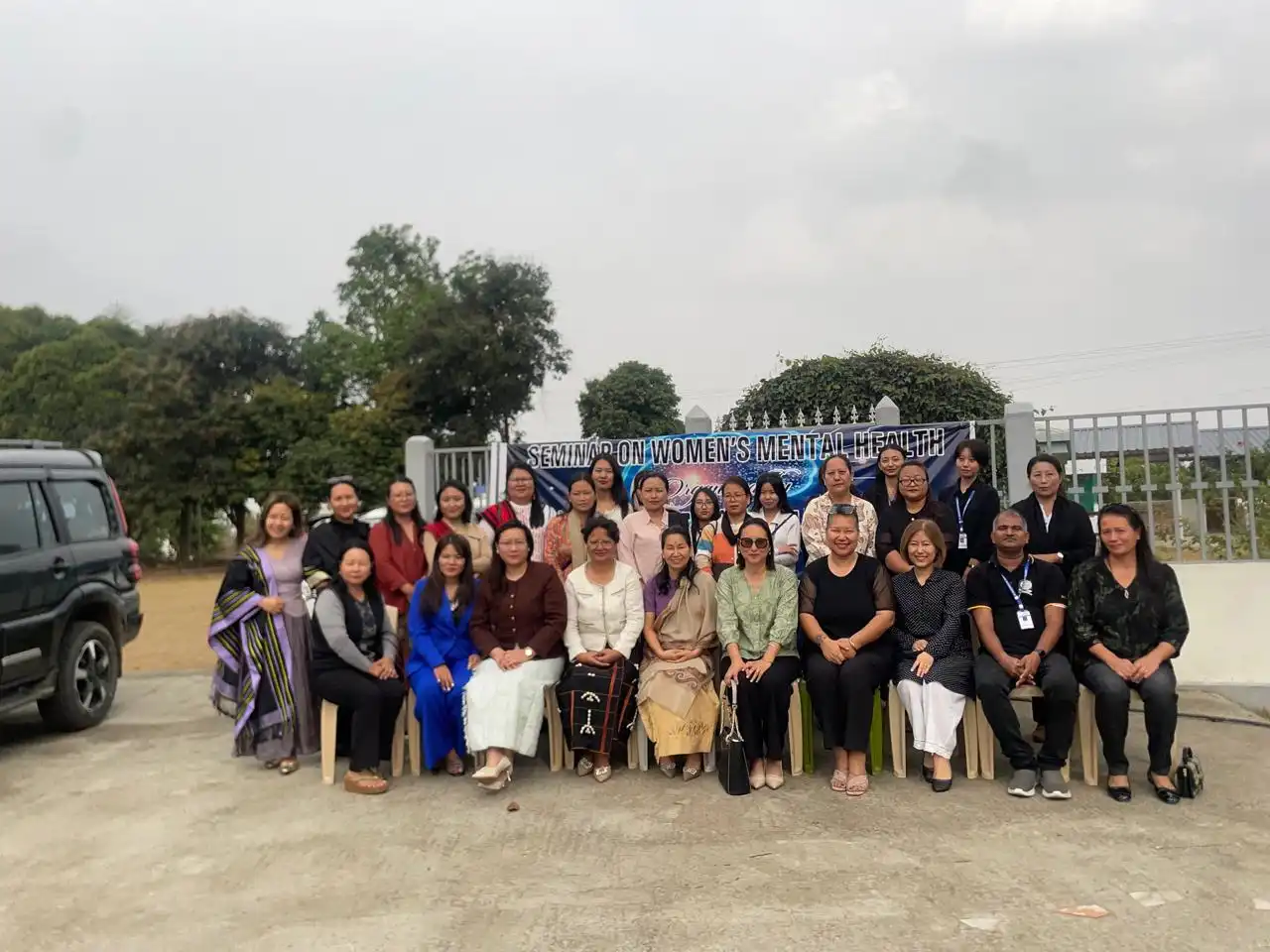
Seminar on women’s mental health at Chümoukedima
Staff ReporterDIMAPUR, Mar 14 (NPN):