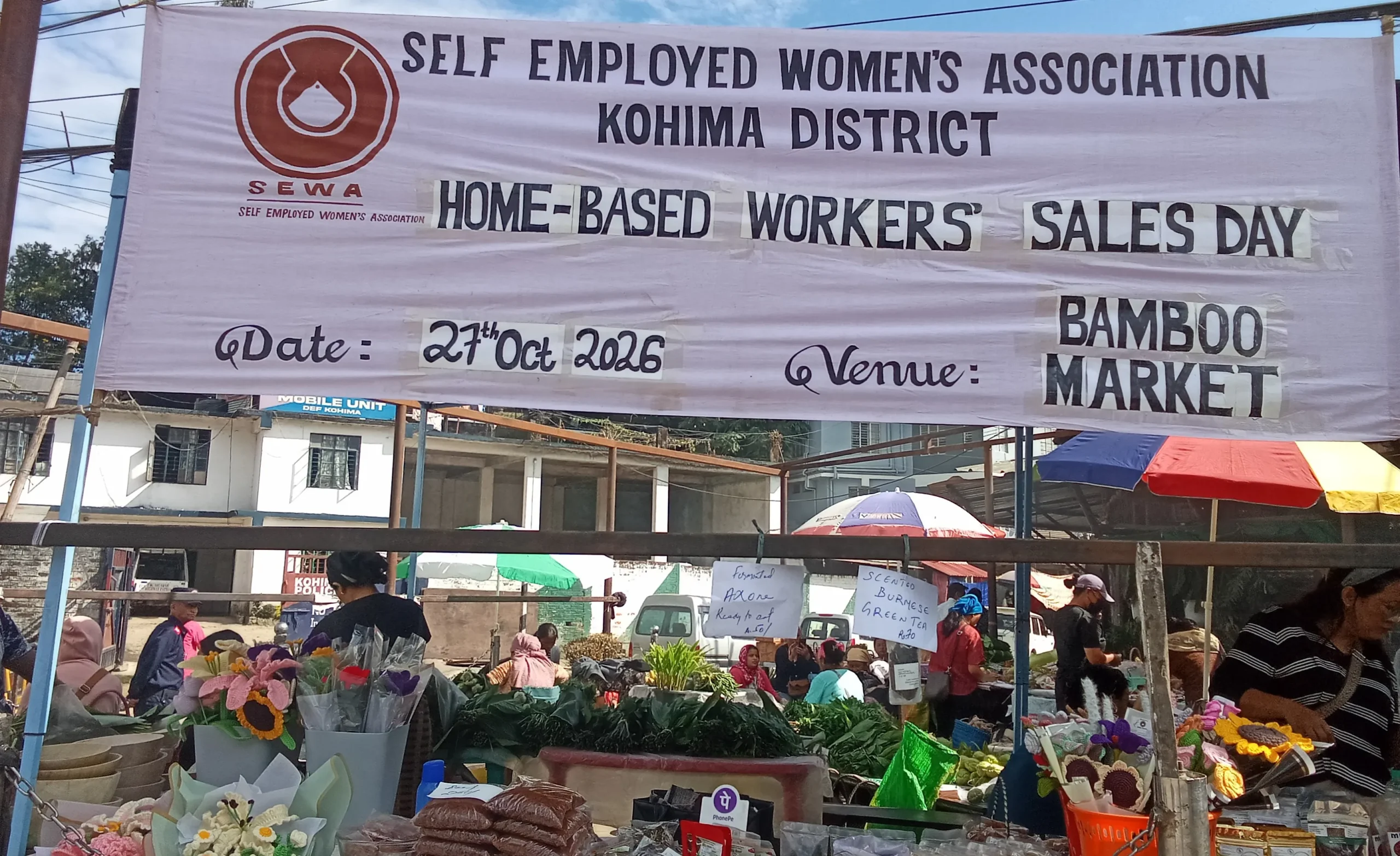
DIMAPUR: Self-Employed Women’s Association (SEWA) Nagaland, Kohima district, in collaboration with the North East Network (NEN), organised a Farmers’ Market-cum-Home-Based Workers’ Sales Day at Bamboo Market, Kohima, on October 27.
According to a press release, members from 11 SEWA units participated in the event, displaying and selling a variety of homemade food products, pickles, organic vegetables, traditional delicacies and other locally made items.
The initiative aimed to promote farmers and home-based workers, create market opportunities for local producers and recognise the contributions of workers whose labour often remains unseen and undervalued.
The organisers highlighted the significant role played by home-based workers in supporting families and sustaining local economies through activities such as food processing, weaving, embroidery and the production of indigenous crafts. Despite their contribution, many continue to face challenges such as limited market access, low earnings, lack of recognition and inadequate social security.
SEWA stated that the programme sought to provide a platform for home-based workers to showcase their products, connect with consumers and gain recognition for their skills. It emphasised that supporting such workers contributes to strengthening families, promoting women’s economic empowerment and preserving traditional knowledge.
The release also underscored the importance of farmers in ensuring food security and preserving indigenous seeds and traditional agricultural practices. In Nagaland, it said, farming remains closely linked to indigenous culture, community life and environmental knowledge.
While acknowledging the challenges faced by farmers, including economic hardship and limited market opportunities, the organisers called for greater respect and recognition for agricultural labour. They stressed that farmers deserved fair prices, improved market access and support for their contributions to society.
The market also served as a direct sales platform for members from the 11 SEWA units, enabling them to reach consumers without relying solely on intermediaries. Such initiatives, the organisers said, help improve income opportunities, strengthen local entrepreneurship and encourage the continuation of traditional occupations.
SEWA further pointed out that traditional farming, indigenous seed preservation, food processing, weaving and handicrafts were not only economic activities but also important elements of cultural heritage. Promoting such products, it said, helps preserve traditional knowledge and skills while creating sustainable livelihood opportunities.
The organisation reaffirmed its commitment to strengthening local livelihoods through self-employment and community-based enterprises. It also appealed to consumers to support local producers by purchasing locally made products and organically grown produce, while recognising the effort and labour behind them.
The organisers maintained that respecting the dignity of farmers and home-based workers, supporting their livelihoods and ensuring equal opportunities were essential for building a more inclusive, self-reliant and equitable society.