
Nagaland has 2nd highest HIV infection rate in the country
As Nagaland along with the rest of the country is set to celebrate the International Youth Day on Monday, the state will also participate in the “Intensified IEC campaign” led by the National Aids Control Organisation (NACO), as the state still has the second highest HIV infection rate in the country. Latest study reports have shown that the HIV prevalence rate in Nagaland was 1.34%.
Currently as the second most affected state in India, Nagaland remains a significant cause for concern in the fight against HIV/AIDS. Recent studies of 2024 indicate that there have been 1,050 newly detected HIV cases, with an alarming rise of cases among the younger generation through unprotected sex.
The most crucial and most affected infected patients are from the age group 25-34 (37.59 %), while it is 29.09% in the age-group 35-49 , 37.59% in 15-34 age-group, 8.33% above 50, and 3.15% under 14.
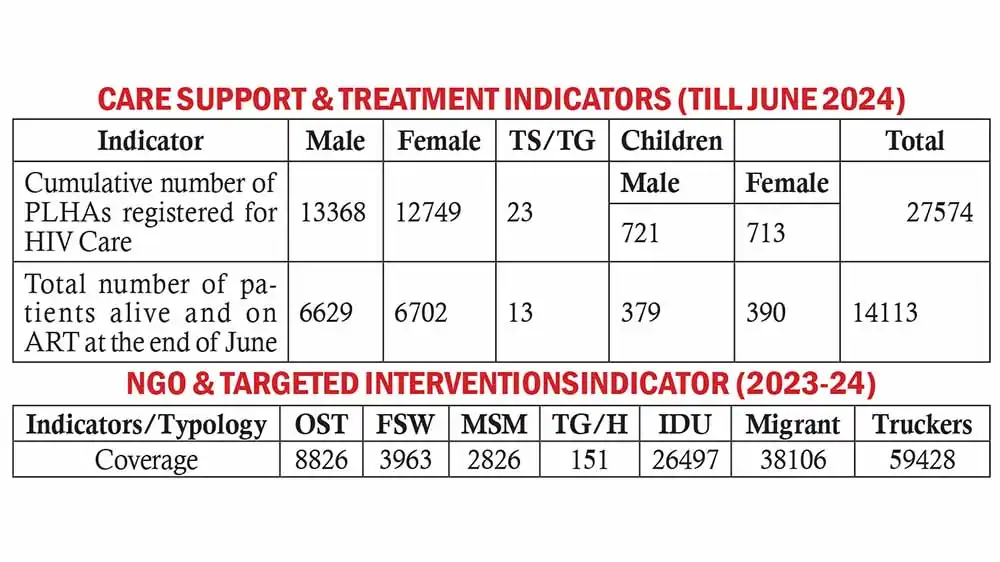
On a national scale, the latest data reveals that India accounts for 1.58% of annual new HIV infections, with a staggering 66,411 newly infected individuals reported. Further, the disease has led to 265 fatalities due to AIDS-related complications. As of 2023, the estimated number of individuals living with HIV in India was 22,185, with 14,113 currently receiving Antiretroviral Therapy (ART), as of June 2024.
Data from the NACO shows that from January 1999 to June 2024, altogether 1,709,491 individuals tested for HIV in Nagaland, while the total confirmed positive cases stands at 34,598.
As per a DIPR report, Nagaland has nearly 20 lakh population (2011 census). This data highlights the urgent need for increased awareness, education, and healthcare resources to combat the spread of HIV/AIDS effectively.
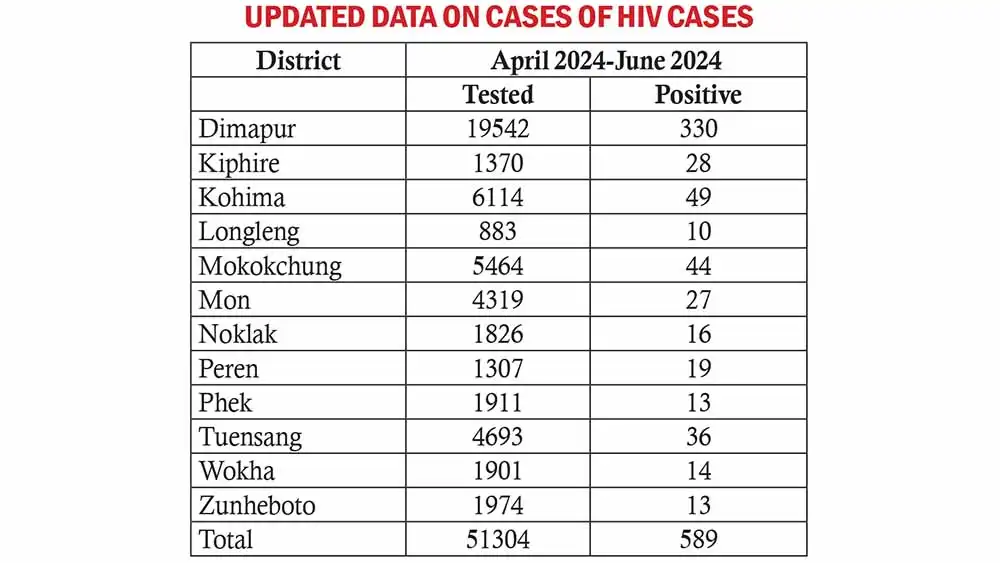
The general client route of transmission (April 24-June 24) through heterosexual in Nagaland is 86.48%, homo/bisexual is 1.11%, parent to child 3.15%, syringe and needles is 8.52 % and 0.74 is not specified or unknown.
A 36-year-old woman living with HIV recounted her challenging journey, marked by a lack of awareness about HIV/AIDS that resulted in rejection from her family and community. Despite this, she chose to adopt a positive mindset and build strength to face the challenges ahead.
Speaking to Nagaland Post, she said “I realise that while HIV/AIDS is not curable, effective treatment helps us remain healthy and slows its progression,” She emphasised self-care, consistently following medication regimen and taking guidance from doctor and health counsellor.
She noted that her relationships with family and friends changed dramatically though they still connect, adding that the dynamics felt different now compared to before.
“My advice is to not fear HIV/AIDS. Instead, focus on maintaining strength and health through proper treatment,” she stated. Additionally, she admitted to holding misconceptions and stigma surrounding HIV/AIDS initially. However, after receiving thorough counselling and information from her doctor and counselor, she said she learned the truth about HIV/AIDS.
“One common misconception is the belief that if parents are diagnosed, their children must also be positive for HIV/AIDS. However, this is not true, especially if the parents are consistently taking their medication as prescribed,” she emphasised.
She highlighted the crucial need for raising awareness in society to combat discrimination against people living with HIV (PLHIV). She pointed out that these individuals needed continuous support—mentally, emotionally, and physically.
Among her positive experiences and accomplishments since her diagnosis is her ability to lead a healthy life, remaining strong and successfully navigating the daily challenges she encounters.
Sharing his experiences, a 28-year-old man recalled that he had faced various health issues and mental trauma before his diagnosis. However, he claimed that since starting ART, his life had changed dramatically, and he now felt healthy and happy.
After his diagnosis, he mentioned that his perspective on PLHIV changed, motivating him to take better care of his health through strict adherence to his treatment. He encouraged others living with HIV to hold on to hope, emphasising proper adherence for a healthy, prolonged life. He also stressed the benefits of a balanced diet, positive thinking, timely medication, and effective counselling.
Since his diagnosis, he disclosed that his relationship with his family members had become much closer, and they now treated him with more love and care. He stated that his family and friends had been incredibly supportive, providing him constant encouragement.
Though so far, he did not face significant obstacles, he pointed out that living in village far from ART centre made collecting his medication every month quite costly and challenging. He acknowledged that he previously held many misconceptions and faced stigma, but after receiving proper counseling, he now aimed to spread positivity in the community.
He pointed out that a common misconception about HIV was that it could be transmitted through casual contact, such as holding hands. He stressed that HIV was preventable and could only be spread through blood and unprotected sex.
As PLHIV often experienced depression, self-stigma, and a lack of confidence, he maintained it was crucial for individuals and communities to offer them moral and physical support.
He said the most significant and rewarding achievement had been overcoming self-stigma and maintaining proper adherence to treatment.
With 20 years of experience in the field, Dr Mehokhu Zao, a senior medical officer at ART Plus Naga Hospital in Kohima, claimed that their treatment plan aimed to be as holistic as possible, incorporating counseling and preparedness sessions.
As building trust and long-term relationship with patients was crucial since treatment was life long, he revealed that the programme included prompt management of opportunistic infections, regular follow-ups, and efforts to retain clients in the treatment plan.
Zao stated that if detected early, patients were typically symptom-free. However, he cautioned that delays in treatment could lead to severe and serious symptoms.
According to him, reasons for treatment delays included lack of awareness, fear of disclosure, reluctance to learn their status, unwillingness to get tested, believing they were fine and did not need hospital visits, and hesitation to commit to lifelong medication.
He explained that approaching a patient recently diagnosed with HIV could vary widely. Some might arrive in an emotional state, while others might be mentally prepared or well-informed about the treatment programme. Some patients might present with multiple opportunistic infections, and others might require intensive care due to severe, life-threatening conditions. Counseling and treatment were tailored to the patient’s clinical and mental state, as well as his or her ability to understand the diagnosis and commitment to ongoing medication. Family support and acceptance, whether from a spouse, partner, sibling, parent, or friend, also significantly influenced treatment outcomes.
Zao emphasised importance of mental health in HIV treatment, pointing out that a positive mindset could greatly aid in accepting their status and promoting adherence to ART.
He mentioned that there were many challenges in the treatment plan, as many young people often led unpredictable lifestyles. Factors like habits, social conditions, and economic pressures could diminish their motivation to pursue a positive and quality life.
Over time, some individuals experienced treatment fatigue and decided to take breaks, which could lead to treatment failure. Frequent interruptions in the treatment plan risked the virus developing resistance to medication. Hence, regular follow-ups, counselling, and clinical management, along with scheduled viral load and CD4 testing, were crucial components of the treatment.
He said preventive measures included discussing the virus, educating oneself, and sharing accurate information with others, while avoiding stigma and discrimination against those living with the virus.
Regarding stigma, he noted that it was not widespread in hospital settings today. If PLHIV faced discrimination or stigma at work or home, he said they should know their rights and that many lawyers were ready to assist them.
With advancements in medication, he claimed the treatments provided through the national programme were highly effective and accessible in all districts of Nagaland. As long as the individuals were informed and committed to consistently following their treatment plans, the virus could be controlled up to 100%, similar to other manageable chronic illnesses like hypertension and diabetes.
This suggested a positive outlook for containing the virus, as effective treatment also significantly reduced transmission rates. “I would like to emphasise the importance of being consistent with your medication, adopting a healthy lifestyle, and sharing any concerns with the ART staff, including counsellors, nurses, and doctors who are trained to support you in every way possible,” he advised. He urged the patients to keep in mind that the virus was suppressible, allowing them to lead a fulfilling life in their work, personal, and social spheres.
A social worker conceded that that many individuals still concealed their conditions due to fear of public ostracisation. He explained that when they provided counselling and visited patients, they must conduct thorough assessments and obtain permission from the patients beforehand, adding that they could only proceed once they received approval.
He mentioned that while they encountered several challenges in the early stages, the situation had since improved significantly. He also highlighted the need to create more awareness among the youth.