
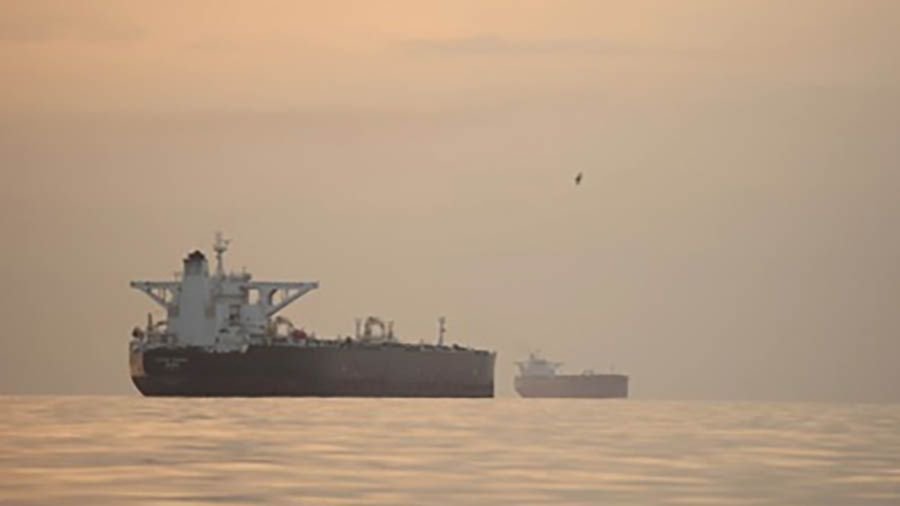
Uncertainty deepened over a fresh round of US-Iran peace talks on Monday after Washington seized an Iranian-flagged cargo ship, prompting Tehran to signal it may not attend negotiations planned in Pakistan.
US President Donald Trump said American negotiators would travel to Islamabad for talks this week. But Iranian officials sent conflicting signals, with state media suggesting Tehran could skip the discussions, citing Washington’s “excessive demands”, according to The Wall Street Journal.
Iran’s foreign ministry spokesperson Esmaeil Baqaei said the country has “no plans for the next round of negotiations,” adding: “We don’t believe in deadlines or ultimatums to secure Iran’s national interests,” according to CNN.
The diplomatic uncertainty follows a sharp escalation in the Gulf of Oman, where US forces fired on and seized an Iranian cargo vessel after it allegedly tried to breach a naval blockade, CNN reported.
Iran condemned the move as “maritime highway robbery” and warned it would respond, while state-linked Tasnim agency said Tehran “will take the necessary action” once the “safety of the families and crew of the vessel” is ensured, according to CNN.
Trump, meanwhile, struck a hard line, saying: “We’re offering a very fair and reasonable DEAL, and I hope they take it because, if they don’t, the United States is going to knock out every single Power Plant, and every single Bridge, in Iran.”
US Vice President JD Vance, special envoy Steve Witkoff and Jared Kushner are expected to be part of the American delegation if talks proceed.
However, Tehran has linked participation in talks to the lifting of the US naval blockade, which it considers a breach of the ceasefire, with Iranian state media suggesting talks may not proceed under current conditions, according to CNN.
The ceasefire itself is fragile and due to expire on Wednesday, with both sides accusing each other of violations, according to The Washington Post.
Behind the scenes, mediation efforts continue. Pakistani authorities have stepped up security in Islamabad, preparing for possible talks despite uncertainty, The Wall Street Journal reported.
Key sticking points include Iran’s uranium stockpiles and the status of the Strait of Hormuz, a vital energy corridor disrupted in recent weeks, according to CNN.
In a more moderate tone, Iranian President Masoud Pezeshkian said the war “benefits no one” and stressed that “every rational and diplomatic path must be used to reduce tensions,” according to CNN.
The United States and Iran have had decades of tensions marked by sanctions, military standoffs and intermittent diplomacy. Previous negotiations have often been accompanied by escalation on the ground.
The Strait of Hormuz remains central to the conflict, carrying a significant portion of global oil supplies, making any disruption a matter of global concern.
Iran rejects taking part in 2nd round of peace talks with US
Iran’s official news agency IRNA said that the country has rejected taking part in the second round of the peace talks with the United States, which were reportedly to be held in Pakistan soon.
Iran’s absence from the second round of talks “stems from what it called Washington’s excessive demands, unrealistic expectations, constant shifts in stance, repeated contradictions, and the ongoing naval blockade, which it considers a breach of the ceasefire,” the agency said in a post on its English account on social media platform X. IRNA said reports released about the second round of peace talks between Tehran and Washington in Islamabad are “not true,” Xinhua news agency reported quoting a report published in Farsi.
It described the reports released by the United States as part of a “media game and in line with the blame game” to pressure Iran, stressing that the US “excessive, illogical and unrealistic demands, frequent changing of positions, constant contradictory remarks, continuation of the so-called naval blockade” have so far prevented the negotiations’ progress.
IRNA added under the present circumstances, there is “no bright prospect” for fruitful negotiations.
On February 28, Israel and the United States launched joint attacks on Tehran and several other Iranian cities, killing Iran’s then Supreme Leader Ali Khamenei, along with senior military commanders and civilians. Iran responded by launching waves of missile and drone strikes targeting Israel and US bases and assets in the Middle East, and exercising tight control over the Strait of Hormuz.
A ceasefire was achieved between the warring parties on April 8, which was followed by lengthy talks between the Iranian and US delegations in Pakistan’s capital Islamabad on April 11 and 12. After the peace negotiations in Islamabad collapsed, the United States imposed its own blockade on the waterway.
The Iranian and US delegations were reportedly expected to hold another round of peace talks in Pakistan soon.