After decades of development, wildlife surveillance has finally come of age. The new Icarus satellite is tracking signals hidden in animal behaviour – which could save the lives of cheetahs, rhinos and elephants.
On a blustery morning at the start of Namibia’s winter, a pickup truck idles to a halt on the edge of Okambara Elephant Lodge, a private wildlife reserve 100 miles (161 km) from the capital of Windhoek. Two women and two men – one armed with a rifle – step out onto the red soil.
Throughout June, Okambara is a bone-dry expanse of thorny trees and shrubs. Although the Sun is shining, cool winds keep the park’s animals vigilant, as the wildebeest, zebras and giraffes sniff out scents on the breeze, which could alert them to danger now moving through the bush. Yet the skilled intruders remain hidden downwind.
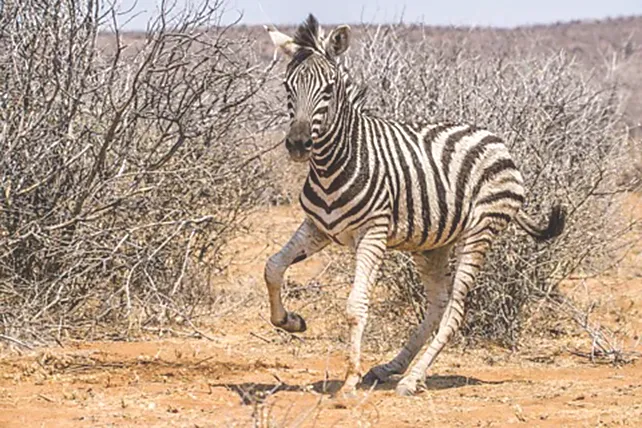
As the hunters close in on the game, the rifle lefts out a boom. Fear jolts through each species: springbok bounce, skittish zebra break into gallop, and the wildebeest turn and race, some not stopping for hundreds of metres, as they barrel away from danger into Okambara’s wide-open salt plains.
Scientists are now able to study these signals written in animal panic thanks to a new satellite system, named Icarus, which is tracking animal movement and behaviour on an unprecedented scale from space. By monitoring how animals react to the presence of human intruders, conservationists hope to pinpoint and crack down on poachers.
Over three days in mid-2024, the intruders in Okambara make around 30 of these salvoes – all captured through the lens of an unmanned drone that hovers overhead. From this sky view, the rapid dispersal plays out, again and again, with animals tracing out signature patterns of panic and withdrawal.
The team of hunters fires dozens of rounds and the game scatters, except for the giraffes, which usually remain impassive and calmly look on from their raised vantage point. Yet by the week’s end, not a single victim has fallen to the hunter’s gun. That’s because, unlike the poachers who have killed hundreds of rhinos in southern Africa, this hunting party is not here for slaughter. Instead, today’s team are scientists doing their best to simulate the arrival of a deadly threat. (BBC)