
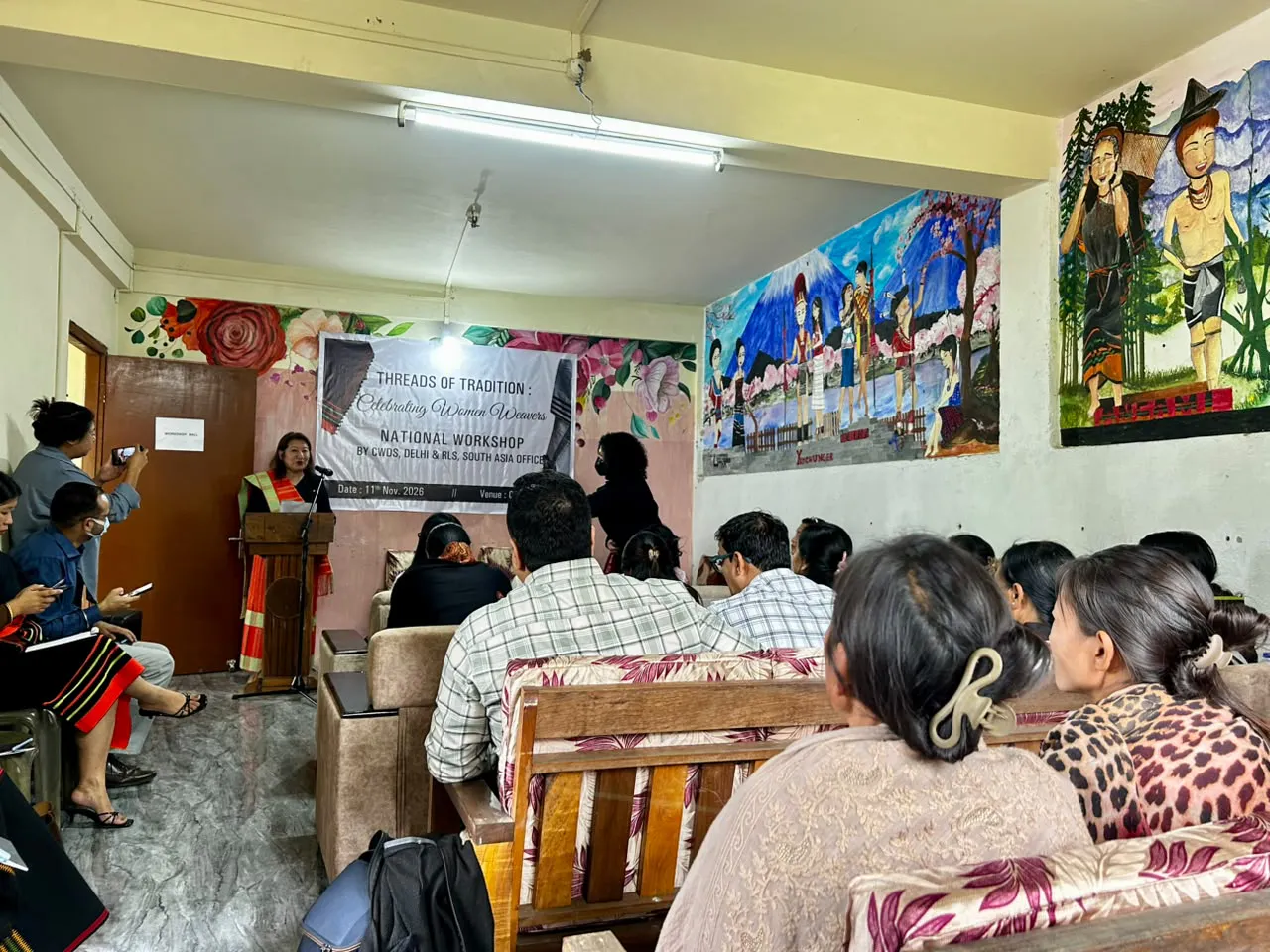
DIMAPUR: A one-day national workshop titled “Threads of Tradition: Celebrating Women Weavers” brought together women weavers, researchers, textile sellers and government representatives at Cradle Ridge Hall, Seithogei, Kohima, on November 11 to highlight the cultural significance of traditional weaving and the need to recognise the women who sustain the craft.
The workshop was organised under an ongoing collaborative research initiative of the Centre for Women’s Development Studies (CWDS), New Delhi, and Rosa Luxemburg Stiftung (RLS), South Asia Office.
Delivering the welcome address, director of the Centre for Peace and Gender Studies, Kohima, Prof. Rosemary Dzüvichü, outlined the objectives of the workshop and stressed the need to ensure that government schemes and institutional support reach deserving women weavers, particularly those in rural areas. She informed that the project documents the lives, experiences and challenges of selected women weavers from the Angami, Chakhesang, Rengma and Yimkhiung communities of Nagaland.
As part of the initiative, the research team visited villages and conducted interviews with women weavers. The workshop provided an opportunity for participants to interact directly with textile sellers from Kohima town, with the aim of strengthening linkages and exploring avenues for mutual growth.
Speaking on the significance of the initiative, project coordinator from CWDS, Prof. Neetha, highlighted the distinct cultural histories of weaving traditions across Northeast India, noting that each community possesses its own processes, designs and practices associated with the craft.
Drawing attention to the often-overlooked contribution of women artisans, she remarked, “No one asks who weaves; they only look at the beautiful weaving,” underscoring the need to acknowledge the women whose knowledge and labour bring traditional textiles to life.
She said the research seeks to document the narratives of women weavers in their own voices, enabling them to share their experiences, knowledge and concerns. Through qualitative interviews conducted with the support of a local research team, the project aims to bring their lived realities to wider attention.
Prof. Neetha described women as custodians of traditional knowledge who play a vital role in passing weaving skills from one generation to another. She explained that textiles carry meanings beyond their aesthetic value, with each woven piece reflecting elements of community identity and social life.
“Each cloth woven is a social marker,” she said, noting that colours, geometric patterns and motifs often signify tribal identity, social status, gender, age, cultural occasions and achievements.
Besides its cultural significance, she noted that weaving remains an important source of livelihood for many women. However, she pointed out that the craft faces increasing challenges from cheaper mass-produced alternatives and the growing use of synthetic materials. The research, she said, will examine how these developments are affecting traditional weaving practices.
She also expressed concern over the accessibility of government welfare schemes, observing that intended beneficiaries, particularly women weavers in rural areas, often remain excluded. The project will seek to understand the reasons behind this gap while documenting the challenges faced by the weavers and their aspirations for the future.
Prof. Neeha Naqvi of the RLS South Asia Office stressed the importance of recognising and respecting indigenous lived experiences. Describing weaving as more than an economic activity, she referred to it as a “labour of love” and highlighted the knowledge, commitment and cultural experiences invested in the craft.
Sharing her personal connection with textiles, advisor to the Naga Mothers’ Association, Abeni TCK Lotha, recalled her interest in weaving since childhood. Referring to Nagaland’s rich oral traditions, she emphasised the importance of documenting and preserving indigenous textile heritage.
She also highlighted her book, Oying Motsü: The Story of Our Threads, which features several textile designs conceptualised by her. Lotha called for greater efforts to preserve the heritage passed down through generations, describing it as a valuable cultural asset and an important component of the community’s economy.
The workshop featured interactive sessions involving Angami, Yimkhiung and Chakhesang women weavers, along with representatives from government institutions including the North Eastern Development Finance Corporation Limited (NEDFi), Nagaland Handloom and Handicrafts Development Corporation Ltd. (NHHDC) and the Investment and Development Authority of Nagaland (IDAN).
The sessions facilitated discussions on the experiences of weavers, institutional support mechanisms and opportunities available to the sector.
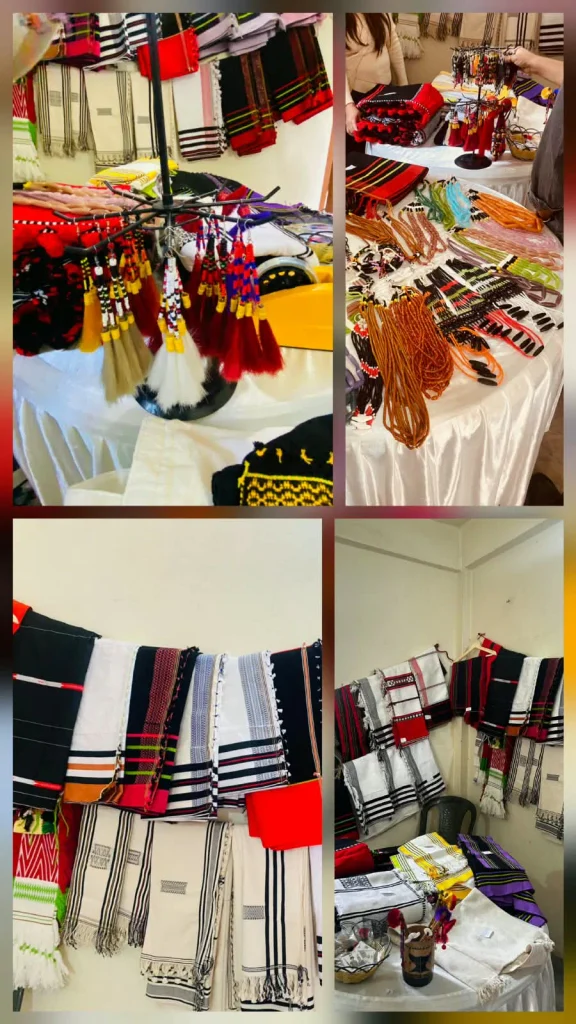
An exhibition-cum-sale showcasing traditional textiles and handcrafted products made by participating women weavers was also organised, providing them with a platform to display their skills and promote their products.