
Advisor for School Education & SCERT, Dr. Kekhrielhoulie Yhome, on Monday addressed a press conference regarding the ongoing protests by sections of teachers in the state, particularly the Nagaland Government Teachers’ Association (NGTA) representing RMSA 2010 and 2013 batches.
Dr. Yhome asserted that while the government empathised with the teachers’ concerns, no decision can be taken outside the framework of law and established procedures.
He explained that the current agitation involved erstwhile RMSA teachers, who have collectively identified as NGTA, demanding payment of salaries under the State Plan (non-plan budget). He recalled a similar protest last month by All Nagaland Adhoc Teachers’ Group (ANATG).
The advisor outlined four categories of workforce in the department of school education including teachers and multi tasking staff (MTS): Regular employees on the payroll of the Government of Nagaland; ad hoc teachers given scale pay (under which ANATG members have been accommodated); contract teachers, most engaged under centrally sponsored schemes (including many under NGTA) and contingency/fixed-pay employees (usually Grade IV), receiving Rs.5,200-6,200 under the Nagaland Minimum Wages Act, who have not protested despite low pay insufficient for family support. Dr. Yhome stated that recurring issues in the directorate stemmed not from a faulty system but from flaws in design and implementation.
Acknowledging communication gaps as a major factor behind recent protests, advisor said he has personally met representatives of almost all agitating groups, including ANATG.
He urged leaders to clearly communicate with members and expressed willingness to meet all members directly. On mainstreaming, he said 5,069 teachers were appointed through departmental recruitment at a time when neither NSSB nor NPSC examinations were conducted.
While some posts were advertised, many were made without advertisement under contract schemes.
Considering their long service, he said the government regularised them despite legal complexities.
For ANATG, advisor said 2,483 teachers were identified; all have been regularised.
Of the 1,166 claiming to protest, he said official records showed 1,119 active members (others resigned or passed away).
Advisor said that so far 235 have submitted documents; P&AR has cleared 100 cases. He said fake certificates would lead to termination and recovery of entitlements.
Referring to the Umadevi judgment, Yhome noted backdoor appointees after 2006 were not entitled to regularisation, but under chief minister Neiphiu Rio’s leadership, the government took Cabinet and legislative decisions to regularise them.
The advisor pointed out that ANATG receives Rs.72.83 crore annually in salary support, projected to rise significantly over five years.
He said NGTA salaries were largely central-funded (released in four instalments); adding that when the fourth instalment was delayed in 2024, the State stepped in.
Over five years (2020–2025), he said Rs.9,426.93 crore was spent on School Education: Rs.7,891.36 crore from State and Rs.1,535.57 crore from Centre.
The advisor said that nearly 8.3–8.5% of the State budget goes to School Education (mostly salaries), with only 0.48% for capital investment.
On Hindi teachers, advisor said over 1,500 were trained at the State-run Nagaland Hindi Institute (not NCTE-recognised), leading to qualification issues. Yhome said a bridge course has enabled 300 to gain recognition, saving Rs.15 crore, with more in process.
He said unfit teachers could face termination after due process.
The advisor said that accepting NGTA demands could cost over Rs.80 crore in lost central assistance while projected liability for last year’s RMSA agitation stood at Rs.313 crore till retirement of the last member.
Also, highlighting workforce concerns, Yhome said only 2.9% of teachers were in the 21–30 age group, signalling a shortage of young recruits. He sympathised with teachers but criticised street protests disrupting academics, especially for students from vulnerable backgrounds.
The advisor cautioned that unauthorised absence could lead to suspension, service breaks, and loss of remuneration.
Yhome said ANATG salaries ranged from Rs.50,000–85,000 under scale pay; contract/scheme teachers receive Rs.20,000–31,000.
Terming comparisons as counterproductive, he stressed adherence to legal procedures, including mandatory suitability tests, adding that non-compliance risked termination per court directives.
The advisor stated informed that a cabinet sub-committee was reviewing temporary appointments made despite court bans on backdoor recruitment outside NSSB/NPSC.
He said the department recommended termination of 668 temporary T-4 appointees.
Yhome said the High Powered Committee can only recommend, not assure outcomes.
Stating that RMSA litigation was now before the Supreme Court after a High Court judgment, he said due legal process must be followed. He disclosed that Samagra Shiksha 2.0 concludes on March 31 while Samagra 3.0 was expected thereafter.
The advisor said the State awaits clarity on the new fiscal framework before major decisions.
Yhome clarified that NGTA members were appointed temporarily under central schemes, with orders stating services were not permanent.
While the Centre initially bore 100% salary costs, he said the current sharing was 54% State and 46% Centre. He acknowledged past “unhealthy practices” creating financial burdens but said the present government was correcting systemic issues through a data-driven, lawful approach.
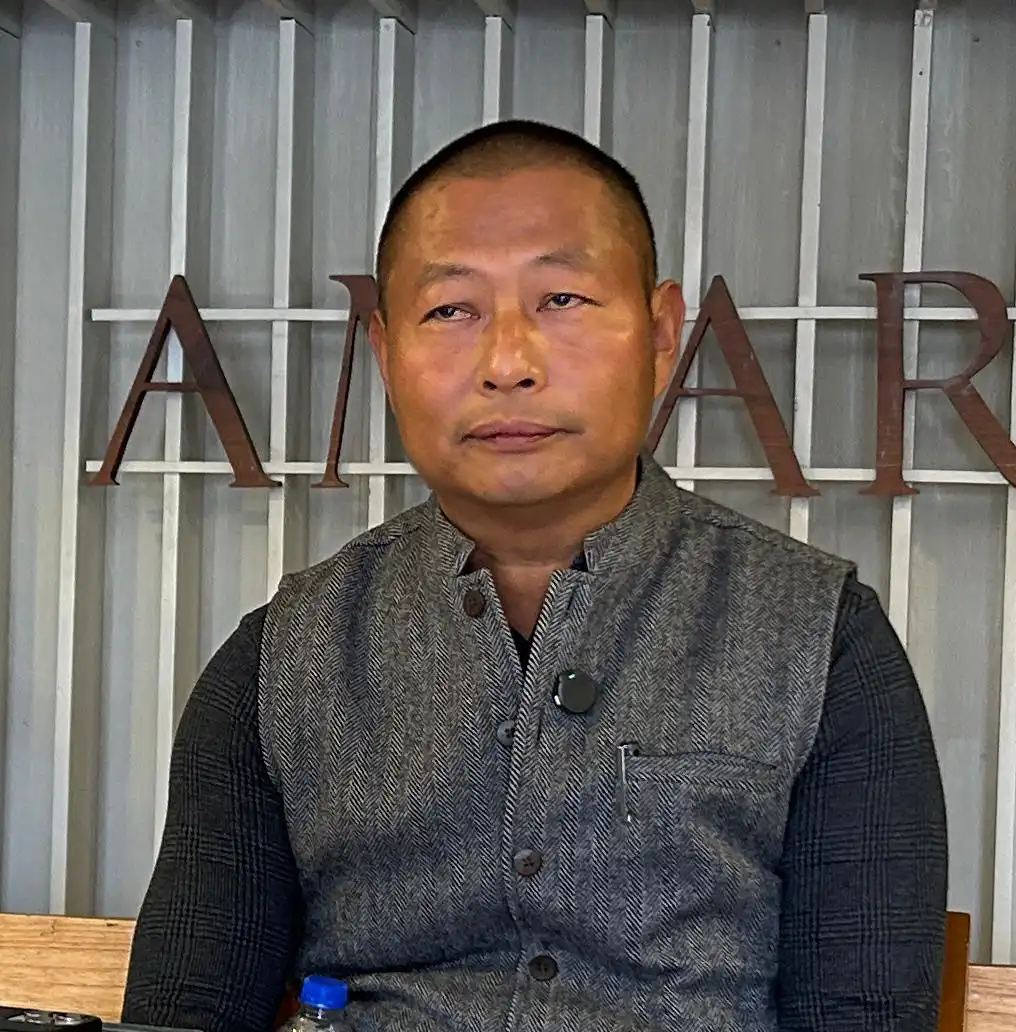
Yhome clarifies on teachers’ salary, regularisation issues
CorrespondentKOHIMA, MAR 2 (NPN):