
Staff Reporter
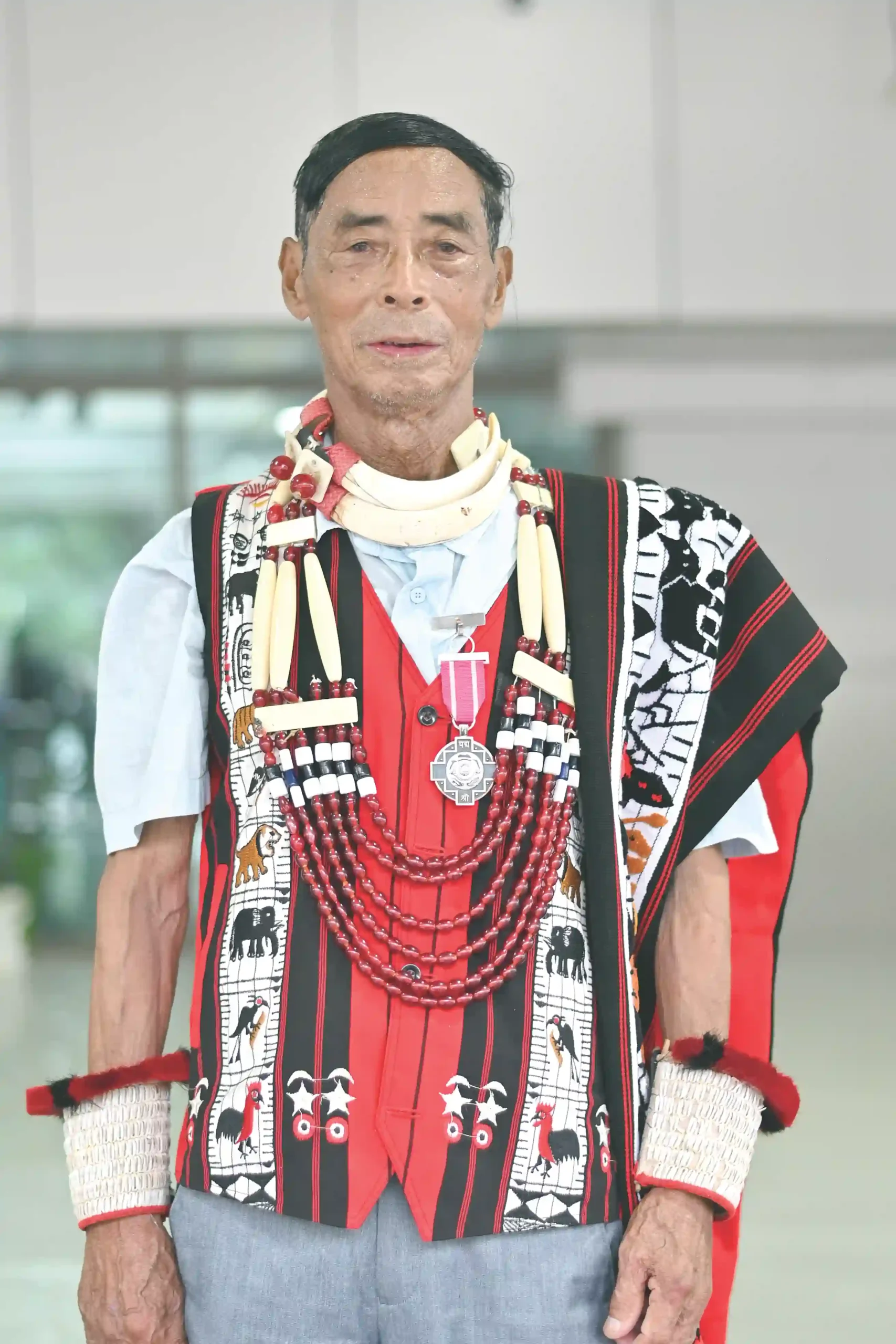
DIMAPUR, JUN 25 (NPN): Padma Shri awardee Sangyusang S. Pongener was accorded a grand civic reception at Dimapur Airport on Thursday by members of Ungma Senso Telongjem Dimapur, Ongpangkong Senso Telongjem Dimapur, Tongpok Semchir Pongen Mungdang Dimapur, Ungmatsür Senso Telongjem Dimapur, Soyim Students’ Union Dimapur and others.
The 81-year-old Ao folk artist from Ungma village under Mokokchung district was recently conferred the Padma Shri by President Droupadi Murmu at Rashtrapati Bhavan during the second civil investiture ceremony held on Tuesday.
He was recognised under the “unsung heroes” category in the field of Arts for his lifelong contribution to preserving and promoting Ao Naga folk traditions and indigenous cultural heritage.
Addressing the gathering, Pongener expressed gratitude for the warm reception and said the honour belonged not only to the Ao community but to the entire Naga people.
He also acknowledged the Delhi Ao Union for meeting and congratulating him and thanked the Central government, State government and various civil society organisations for recommending his name.
Above all, he credited God for the recognition.
The programme was addressed by Ungma Senso Telongjem Dimapur president Repasosang, Ongpangkong Senso Telongjem Dimapur president Benjongtoshi, Tongpok Semchir Pongen Mungdang Dimapur president Tali Pongen and family member C. Rongsen Pongen. The programme concluded with a thanksgiving prayer by Home Missionary of Ungma Senso Telongjem Dimapur, Rev. Manen.
Interacting with media persons, Pongener said he was deeply honoured and thankful to the Government of India, Prime Minister Narendra Modi and President Droupadi Murmu for the recognition. He also conveyed gratitude to the State Government, Chief Secretary and Department of Art and Culture for their support.
Recounting his journey, Pongener said his passion for folk music, dance and culture began in childhood through learning from his ancestors and his father. He later formed a cultural group and travelled across the country showcasing Naga traditions and earning recognition from various organisations.
Expressing concern over the gradual disconnect of younger generations from their roots, he stressed the need to preserve cultural identity and said he had been actively teaching folk songs and dances. He also expressed his desire to establish cultural academies to train young people in traditional arts, but noted that financial constraints remained a challenge.
“If the Central government provides support, I would like to open academies in different places to teach our traditions,” he said.
On documenting oral traditions, Pongener said he continued to preserve and pass on knowledge through teaching. Emphasising the importance of traditional attire, he described it as a symbol of Naga identity and urged the younger generation to understand and appreciate its cultural significance. “Our dress reflects our culture, music and dance. I want to teach the younger generation how to wear it correctly and appreciate its value,” he said.