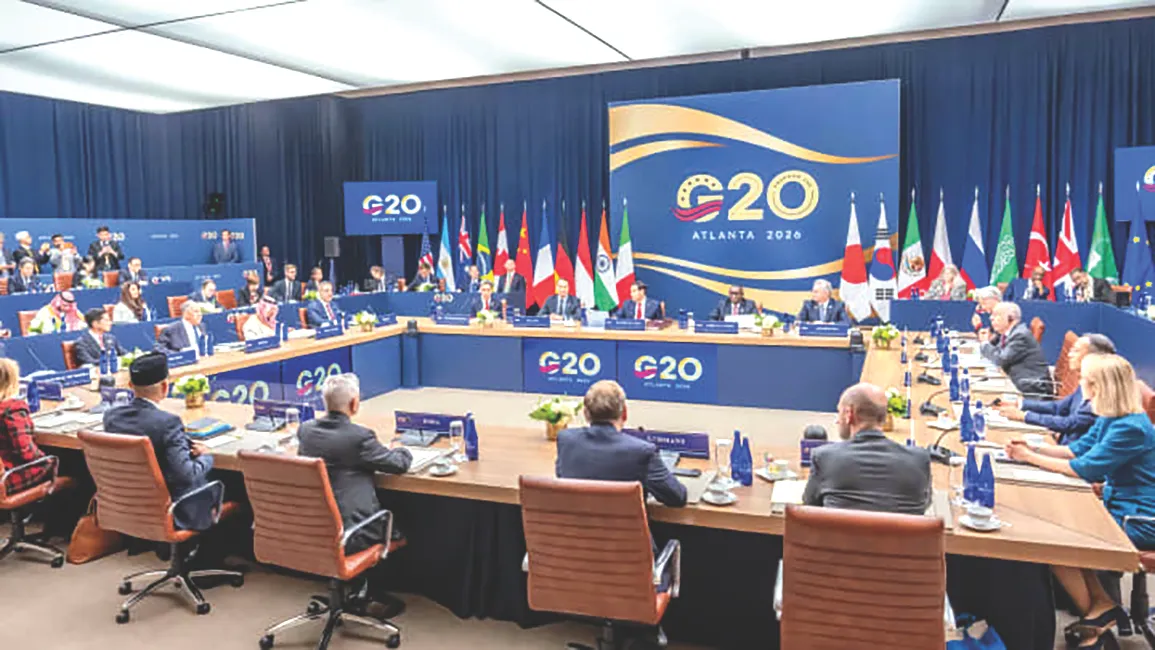
ATLANTA, NOV 1 (AP): Top diplomats from the Group of 20 largest world economies wrapped up two days of talks on Saturday without reaching consensus on several critical global security issues after divisions, notably over Russia’s war with Ukraine, visibly overshadowed the start of the Atlanta meeting and impacted its outcome, too.
As a result, the group did not release a joint communique but relied on a chairman’s statement summarising the talks that Secretary of State Marco Rubio released after the meetings closed. That statement made no mention of any agreements reached. Rather, it referred to a list of priorities, from energy and food security to freedom of navigation, that G20 members determined were important to solve. “I wouldn’t pretend to you today that we are close to finding universally accepted solutions to these problems,” Rubio told reporters at a news conference marking the end of the meetings.
“But,” he said, “I do think that among the G-20 represented here are countries that are working together to solve some of them, particularly in the realm of supply chains and critical minerals.”
Rubio had said the first day of the session was “very productive.” On Saturday, he hosted sideline talks with his counterparts from Australia, India and Japan before leading the final G20 event that focused on freedom of navigation in the Strait of Hormuz and the Red, Black and South China seas.
“I made clear to our partners that secure supply chains are essential for growth,” Rubio said in a social media post on X. “Critical trade routes including the Strait of Hormuz and Bab al-Mandeb Strait must remain secure and open to commerce. And we must continue to strengthen and expand critical mineral supply chains to protect our future.” At a reception for G20 participants Friday night, Rubio sounded optimistic. “Together, I think that we are mapping a vibrant, dynamic, and bold economic future, one that will pioneer new horizons for the entire world,” he said.
Also hanging over the G20 meeting was the prospect of new US military intervention in Iran. That has put the region, including G20 member Saudi Arabia, on edge. Rubio met on Friday with his Saudi counterpart, Prince Faisal bin Farhan, as well as Turkish Foreign Minister Hakan Fidan, whose country has been a key mediator.